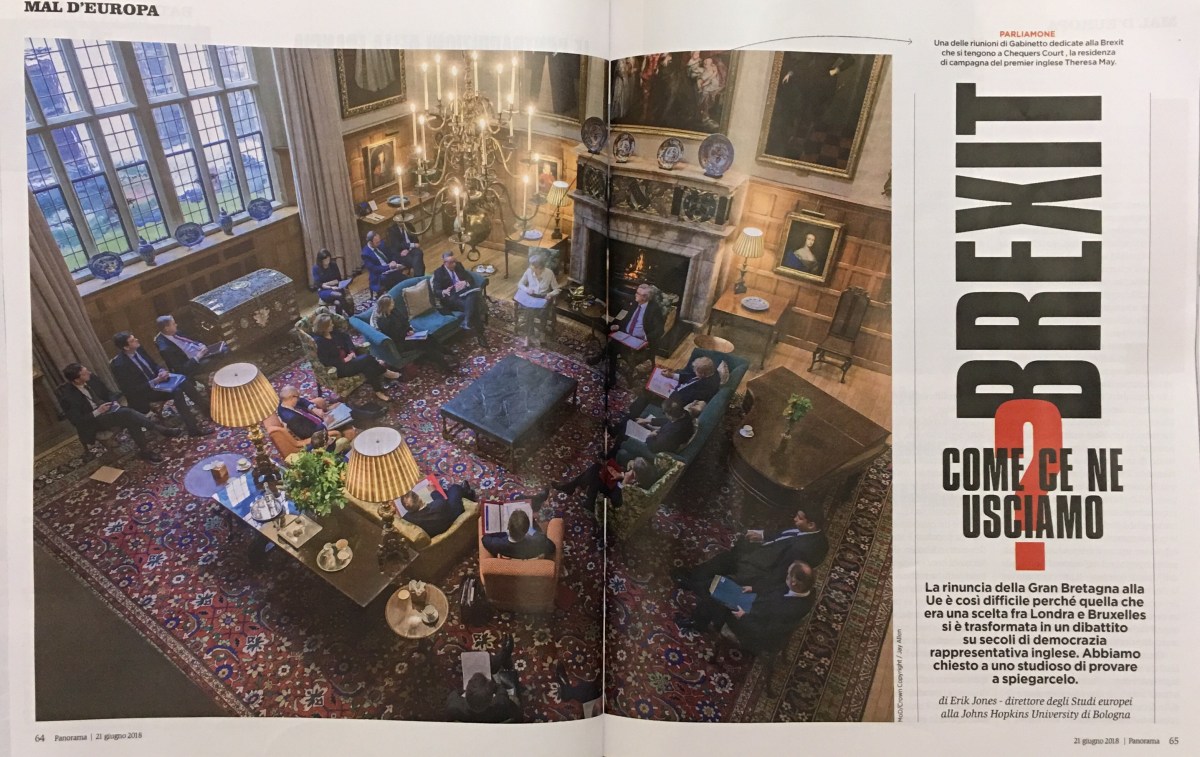
The British government faced another crisis in the House of Commons this week over Brexit, having found a way to stave off the crisis it faced the week before. Both the country and its political parties appear deeply divided over whether the remain in the European Union or to leave. As we know from the June 2016 referendum, the ‘leave’ voters have a narrow majority. The ‘remain’ voters lost. And while the facts on the ground appear to point inexorably toward a British exit, the choice is still far from settled. The reason for this indecisiveness is fundamental. As the British have learned over the two years, Brexit is about more than just their relations with Europe. It is about who makes decisions in a liberal democracy.



 Erik Jones