How Long Will the Dollar Remain the World’s Currency?

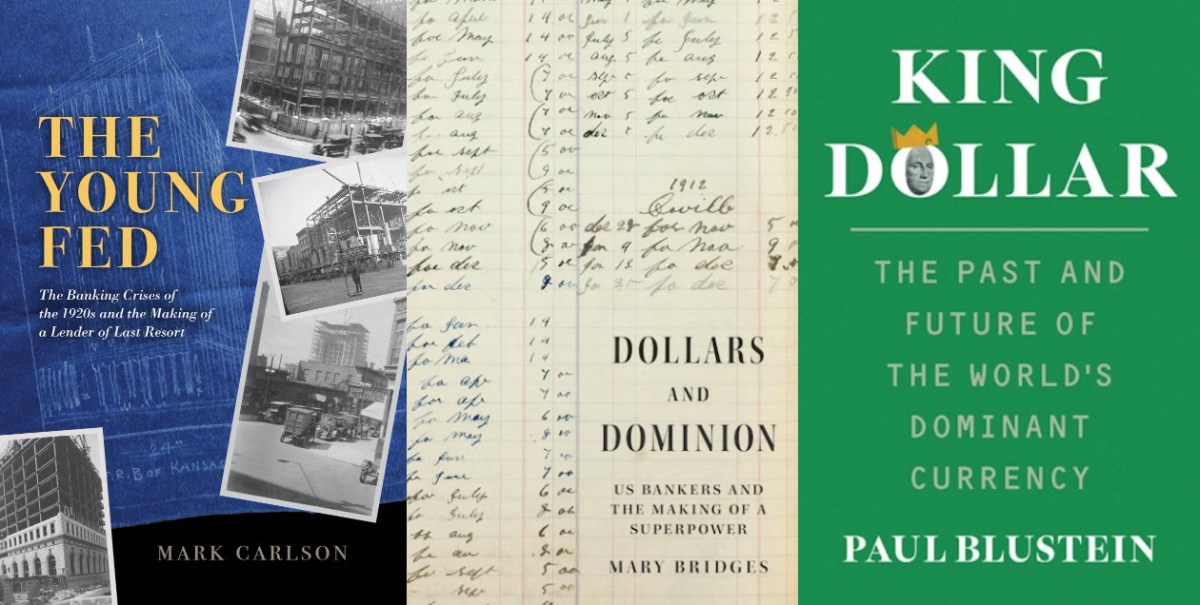
To understand the future of dollar dominance, you need to understand its past.  The recent books about the early experiences of the U.S. Federal Reserve System (Mark Carlson), the spread of U.S. banks abroad (Mary Bridges), and the resilience of the dollar as a global currency (Paul Blustein), offer essential insights for any debate about how either other national currencies or new technologies could replace the dollar in world markets. The dollar’s emergence as a global currency came unexpectedly; its disappearance may be unexpected as well.

Continue reading →

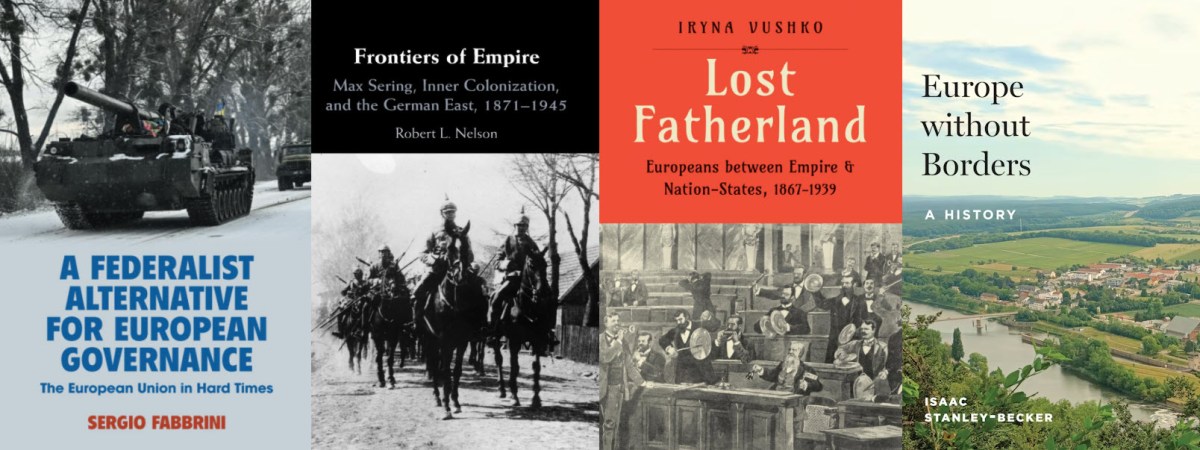
Nationalism, Cosmopolitanism, and the European Project

Four recent books – by Sergio Fabbrini, Robert L. Nelson, Iryna Vushko, and Isaac Stanley-Becker – challenge any presumptions about the uniqueness of recent European experience.  They also force us to reflect on how the integration of Europe connects with the integration of individual countries (Fabbrini), how the experience of colonization has shaped the European continent (Nelson), how lessons from Europe’s imperial past continue to influence visions of its future (Vushko), and how the effort to promote freedom of movement has revealed a tension between nationalism and cosmopolitanism that runs across the European project (Stanley-Becker).

Continue reading →

Three Perspectives on the Crisis of Democracy in Europe

The usual story about the crisis of democracy centres on populists and other bad actors who spoiled the party for the all the rest. There is some truth to this account. But it only captures a small part of what is happening. To get a full picture, you need to look at the failure of democrats and democracy to deliver on what was promised. You also need to consider the perverse incentives that democratic institutions create. And you have to imagine that there are important groups of people – many of whom are poor and disadvantaged – who come out better under other systems of government (and for whom democratization has made things worse). These perspectives on the crisis of democracy do not deny the great promise that democratic institutions have to offer. But they do give pause to consider the many different challenges that democrats have to face if the project of giving power to the people is going to be a success. Three recent books by Philipp Ther, Zsuzsanna Szelényi, and John A. Gould explain why.

Continue reading →

Five Examples of the Strength of Area Studies

Universities do not like to study people who live in places anymore. Instead, they emphasize the importance of theory and method. There are many good reasons for doing so, particularly as you consider the wide range of skills involved in analyzing the enormous amounts of data that the internet makes available. But there are also costs. Theory is a relatively poor guide for understanding why Russia invaded Ukraine, for example. You can make arguments from theory after the fact, but a close examination of developments in the country offered a better chance for anticipating what Russia did and where we are likely to go from here. The first book in this collection is a good illustration of what I mean with that statement. That book was published just weeks before the Russian invasion. The insights it offers on the war as it is unfolding are compelling.

Continue reading →

Three Perspectives on Money, Finance, and Central Banking

Last autumn I reviewed three books that highlighted different perspectives on money, finance, and central banking that deserve closer attention. 

In the first book, Gottfried Leibbrandt  and Natasha de Teran point out that the main reason to have money is to make payments – which means that when you start to change the payments system, you wind up changing just about everything connected to money.  That ‘wallet’ on your cell phone is only the tip of the iceberg.

In the second book, Fabio Mattioli explains that when we talk about finance, we are primarily talking about forward looking contracts – and those contracts are only as good as their enforcement.  By implication, a financialized economy looks very different when politicians start deciding which contracts will be honoured and which will not.  Any debate about ‘rule of law’ goes to the heart of the financial economy.

In the third book, Willem Buiter reminds us that the central bank is a public asset owned by the national state. If national governments accounted for that asset in their balance sheets, they would uncover important revenue streams that could stimulate the economy and reduced burdens on taxpayers.  The ‘helicopter money’ that policymakers talked about both during the global economic and financial crisis and at the start of the pandemic is not as strange or uncommon as you might think.

***

Continue reading →
From Narrative to Crisis: The Future of Economic Thought

Three recent books explore important changes in the way we understand the economy. Robert Shiller focuses on the need to bring in ‘narratives’ that circulate within the economy or that can be borrowed from other disciplines; Thomas Philippon asks why America gave up on free markets and looks again the importance of regulation in relation to market competition; and James Gerber examines the influence of financial crises and the lessons we learn in their aftermath. Together these books tell us a lot about where economic thinking is headed. The novel coronavirus pandemic has done little to change the direction of travel and much to accelerate the pace.

Continue reading →

Refugees Make History

Nationalism is only one of many exclusive identities; it is also only one of many powerful forces in Europe and elsewhere that shape political events. Religion and ideology also matter, both in bringing people together and in driving them apart. The energy they create is potentially lethal, particularly for those who find themselves holding onto the wrong (sort of) identity. Identity conflict inevitably creates refugees – people who do not belong to the ‘in-group’ and so find themselves cast out of society. The challenge for governments and societies is to manage the consequences with the least possible dislocation and to their greatest advantage.

Continue reading →

The Secrets of Bucharest’s ‘Old Town’

Bucharest is not an historic city, but it is rich in history. The distinction turns out to be important both for our understanding of Romania, politics, and historiography more generally. Emanuela Grama uses the politics that surrounded the Old Town of Bucharest over the past century to force us to reconsider the constitution of the state, the relationship between identity and ideology, and the balance in historical development between grand narratives and incremental change. Moreover, she does all this by demonstrating that the study of history and the stuff of history are rarely if ever the same.

Continue reading →

An East-West Divide in Europe?

There is a big conversation brewing about the deepening East-West divide in the European Union.  Much of this conversation started long before the pandemic.  Social scientists like R. Daniel Kelemen have been worried for a long time now about the diverging trajectories in democratic institutions and about the possible roles that European Union (EU) institutions may have played in supporting that evolution.  More recent scholarship shows how the onset of the COVID-19 pandemic has exacerbated that tension.  This raises questions about whether such developments were always likely to happen, and about how we can better understand East-West relations in Europe.  Fortunately, three brilliant new books promise to help in that understanding.  The first, by Larry Wolff, examines the role of Woodrow Wilson in help shaping the politics of Central and Eastern Europe.  The second, by John Connelly, explores the evolution of East European nationalism.  The third, by Lenka Bustikova, examines the problem of extreme right mobilization.  The conclusion I take away from these books is that there are important political dynamics at work in Eastern Europe that need deeper understanding; it is not that East and West are fundamentally different.  We can learn a lot from the study of Eastern Europe as we struggle to interpret developments elsewhere as well – Western Europe very much included.

Continue reading →