Why Institutions Matter and Yet People Still Choose to Break Them: A Collection

When Donald J. Trump came back into power, his team brought along a 900+ page programme for dismantling the institutions of government. There is a certain irony to that. Trump’s team clearly hates ‘bureaucracy’, but you need a lot of staff and a substantial organizational structure to produce a 900+ page edited volume. The irony only deepens when you realize how much time the people who contributed to that volume have thought about both the institutions of government and the institutions created to help people think about the institutions of government.

Continue reading →
Rethinking Europe in an Age of Uncertainty: From Club to Commons

If water started disappearing from the European continent, glaciers melted, rivers ran dry, rain stopped falling, you would think Europeans would come together to do something about it.  They would look closely and compare notes about the sources and uses of water.  They would study why the supply was running down and they would find ways to restrict demand to match.  This would not be an easy task.  It was not an easy task for the communities of the ancient world that lived between the Tigris and the Euphrates either.  Humankind has learned to adapt to these sorts of challenges through bitter experience.  Europeans might fail to pull together, and Europe might be overtaken by the desert.  But they would try very hard to find a solution before they let that happen, and they would work with whomever is necessary to ensure their success.

Continue reading →

How Long Will the Dollar Remain the World’s Currency?

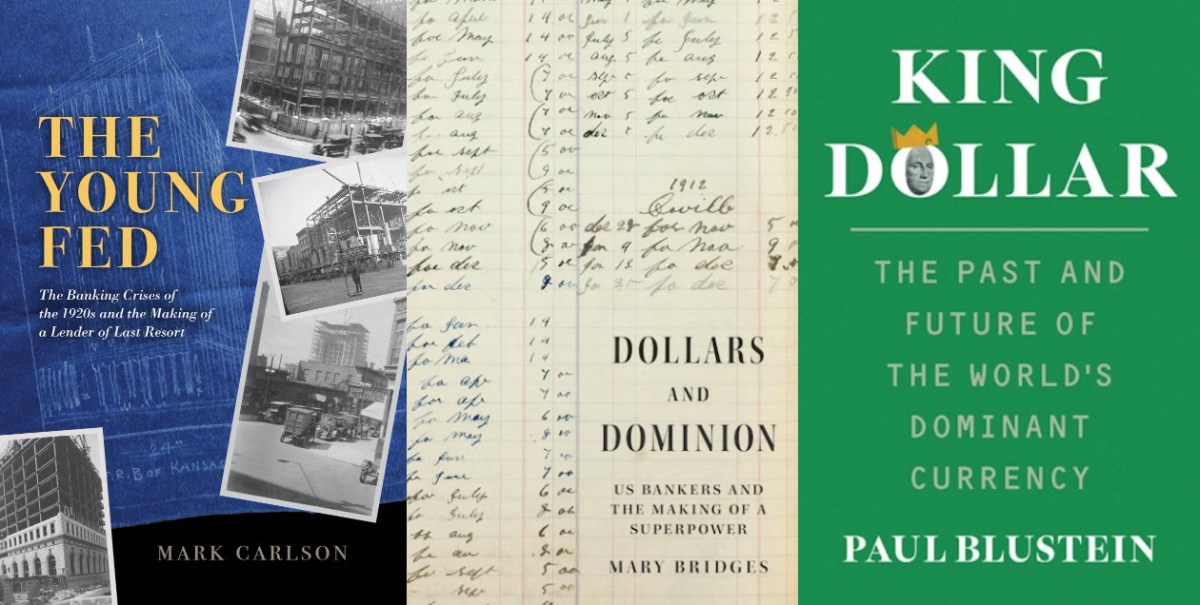
To understand the future of dollar dominance, you need to understand its past.  The recent books about the early experiences of the U.S. Federal Reserve System (Mark Carlson), the spread of U.S. banks abroad (Mary Bridges), and the resilience of the dollar as a global currency (Paul Blustein), offer essential insights for any debate about how either other national currencies or new technologies could replace the dollar in world markets. The dollar’s emergence as a global currency came unexpectedly; its disappearance may be unexpected as well.

Continue reading →

Abandoning Institutionalism

The rise of populism and the weakening of democracy have captured attention across advanced industrial societies, particularly among liberal elites on the centre left. How could voters elect politicians who undermine the provision of social services, chip away at the rule of law, coopt or constrain the free media, and at times even threaten to bankrupt the state? How could they reward or even tolerate those leaders for engaging in overt acts of corruption while at the same time preventing any plausible alternative or opposition group from holding them to account through free and fair elections? Sure, people may feel they got a bad deal from globalization, and they may resent the pretensions – both cultural and intellectual – of an overly educated, out-of-touch elite. A little outrage and protest seem appropriate to gain attention. But why are they turning against the institutions that were created to serve advanced industrial societies, from the smallest local authority through the welfare state to the rules-based multilateral system?

Continue reading →

Transatlantic Crisis? Why This Time is Different

To appreciate the radical changes that have taken place in the transatlantic relationship, it helps to have a sense of perspective.  Why is the ‘crisis’ so much more real now than it was in decades past?  You don’t need to do a lot of reading to learn that the relationship has never been easy.  Somehow, this time feels different.  To explain why, I pulled together a collection of thirteen articles I wrote about the evolution of the transatlantic relationship over the past twenty years.  One of the articles was published in Italian and so I included the English-language working paper for those who are interested.  There are three big themes in this collection – about the changing nature of power in international relations, the challenge of maintaining domestic support for engagement with the outside world, and the progressive loss of trust across the Atlantic together with the breakdown of solidarity on either side.  The articles in this collection were not written to trace these themes.  Those themes arose as I kept coming back to the same subject matter from one year, election, administration, ‘crisis’, or decade to the next.

Continue reading →

Five Examples of the Strength of Area Studies

Universities do not like to study people who live in places anymore. Instead, they emphasize the importance of theory and method. There are many good reasons for doing so, particularly as you consider the wide range of skills involved in analyzing the enormous amounts of data that the internet makes available. But there are also costs. Theory is a relatively poor guide for understanding why Russia invaded Ukraine, for example. You can make arguments from theory after the fact, but a close examination of developments in the country offered a better chance for anticipating what Russia did and where we are likely to go from here. The first book in this collection is a good illustration of what I mean with that statement. That book was published just weeks before the Russian invasion. The insights it offers on the war as it is unfolding are compelling.

Continue reading →

Choice and Division in Joe Biden’s America

The election of Joseph R. Biden, Jr., as the 46th President of the United States creates an important opportunity to change American politics and the transatlantic relationship. In his acceptance speech to the nation, the President-Elect argued that ‘the refusal of Democrats and Republicans to cooperate with one another is … a decision. It’s a choice we make. And if we decide not to cooperate, we can also decide to cooperate.’

Making that choice to cooperate will not be easy for either side. The differences between the constituencies that the two major U.S. political parties represent are structural. Bringing them together will involve important concessions. Moreover, those concessions will not be equal because the differences across American society are not evenly balanced. Worse, trust is lacking — which means no one is eager to make the first concession. Biden may lead, but neither Democrats nor Republicans are likely to follow without a clear vision of where they should be headed and a strong incentive to go there.

Continue reading →

Citizens of the World and Citizens of Nowhere

During her first address to the Conservative Party as Prime Minister of the United Kingdom in October 2016, Theresa May made it clear that: ‘if you believe you are a citizen of the world, you’re a citizen of nowhere. You don’t understand what the word “citizenship” means.’ Moreover, this was not an off-the-cuff remark. As she explained at the top of the speech, May was setting out her governing philosophy. And central to that philosophy is what she called ‘the spirit of citizenship’, which she defined in terms of ‘the bonds and obligations that make … society work,’ ‘commitment to the men and women who live around you,’ and ‘recognising the social contract’ in a way that puts ‘local’ people ahead of people from ‘overseas’. That sort of thinking is attractive, but dangerous — now more than ever.

Continue reading →

Avoiding another Twenty Years’ Crisis

On 4 December 2018, United States (U.S.) Secretary of State Michael R. Pompeo gave a speech at the German Marshall Fund in Brussels about ‘restoring the role of the nation-state in the liberal international order.’ At the core of that speech, he posed a fundamental challenge to world order: ‘Every nation – every nation – must honestly acknowledge its responsibilities to its citizens and ask if the current international order serves the good of its people as well as it could. And if not, we must ask how we can right it.’ He insisted that: ‘nothing can replace the nation-state as the guarantor of democratic freedoms and national interests.’ And he went on to explain: ‘Our mission is to reassert our sovereignty, reform the liberal international order, and we want our friends to help us and to exert their sovereignty as well. We aspire to make the international order serve our citizens – not to control them.’ In the language of the most recent U.S. national security strategy, this perspective on world affairs is characterized as ‘principled realism’. Pompeo describes it more simply as ‘common sense’. While Pompeo is right that his view is common, he is wrong to believe in its realism or even that it makes sense.

Continue reading →

Trouble at the Fed (and Elsewhere)

As U.S. President Donald Trump starts asking about whether he can fire the Chairman of the Federal Reserve, it is time to start asking how strong the protections are for politically independent central banks.  The answers are alarming: Trump is not the only one challenging central bank independence; he is also not the most successful.  Indeed, the challeges are widespread and they have been growing for some time.  That is reason enough to pick up Paul Tucker’s book Unelected Power — which was recently named by Foreign Affairs as one of the top books published in 2018.  If you want a taster, my review of Tucker’s book from Survival is below.  The punchline is that while people are right to be concerned that Trump would violate the independence of the Fed, that does not mean either the Fed or any central bank should be left entirely to its own devices.

Continue reading →