If there is one theme that unites European responses to the global financial crisis, it is national responsibility and not European solidarity. There have been moments of solidarity to be sure. The creation of first temporary and then permanent bailout funds was the most obvious; the unconventional monetary policies of the European Central Bank (ECB) and ECB President Mario Draghi’s ‘whatever it takes speech’ count as well. Nevertheless, with the exception of the European Stability Mechanism (ESM), these moments of solidarity have been exceptional, temporary and transitional. They bought time for governments to restructure their banks, consolidate their finances, reform their market institutions, and prepare for an uncertain future so that another round of crisis summits and rushed institution-building will no longer be required. Once this transition period is over, cross-border redistribution and burden-sharing can be kept to a minimum. That is the objective.
Tag / European integration

Populism in Europe: A Government & Opposition Collection
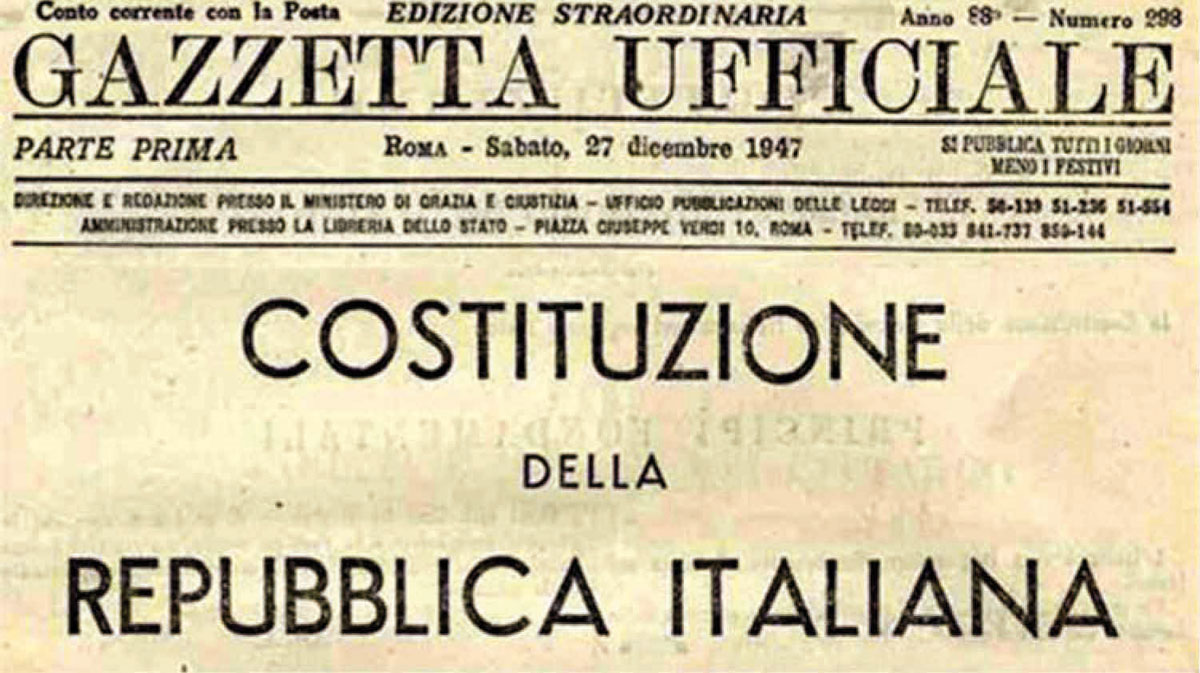
The political landscape of Europe is changing rapidly and in ways that are hard to interpret. The recent Italian referendum is a good illustration. Matteo Renzi inherited an agenda to reform the Italian constitution when he became prime minister. He negotiated an agreement with the centre-right on the precise details of the package. He shepherded the agreement through two majority votes in each of Italy’s two chambers of parliament. He then brought the agreement to a popular vote as per constitutional requirement and with an electorate broadly disenchanted with politics and therefore favourable to reform. Nevertheless, virtually every party outside the government opposed the reform package and Renzi lost the referendum vote by a spread of twenty percentage points. Now Renzi is out of office. Italy is without a viable electoral system because of changes made in anticipation of the (failed) constitutional reforms. And it is unclear whether the new government headed by Paolo Gentiloni has sufficient support in the Senate to pass a new electoral law. Most Italians did not want Renzi’s constitutional reforms and yet they are not happy with the status quo either. Disillusionment with politics has grown as a result.

What the Apple Fine Tells Us about Multinationals and Taxation
On 30 August 2016, the European Competition Commissioner, Margrethe Vestager, announced that ‘Ireland granted undue tax benefits up to EUR 13 billion to Apple.’ Those benefits distort competition within the European marketplace and so the Commission instructed Ireland to recover the unpaid taxes. This announcement ignited a storm of protest from Apple and from the Irish government. It also sparked a wider debate about how multinational companies are taxed and about whether some form of tax harmonization is essential to the functioning of Europe’s internal market. Although some general principles have emerged from the conversation, the deeper implications of the controversy remain unclear. The debate here is less about the treatment of a single company than about the way European governments have tried to promote regional development and how the United States has relied on multinational corporations to exert influence in the wider world.
Italy’s Referendum and the Future of the EU
Italians head to the polls on Sunday, December 4, to approve or reject a series of constitutional reforms that will redirect policy competence from the regions to the state, that will transform the Senate into a council of regions, and that will concentrate power in the Chamber of Deputies and the national government. Italian Prime Minister Matteo Renzi argues that these reforms are necessary to equip Italy with the flexibility needed to compete in the global economy of the 21st Century. His opponents counter that changing the constitution this way will eliminate critical checks and balances and so make the country vulnerable to authoritarianism if not dictatorship.

Why We Need a Theory of Disintegration
The British vote to leave the European Union (EU) has introduced a new political dynamic in Europe. For lack of a better term, let’s call it ‘disintegration’. The problem is that we know very little about the many different motivations and other forces at work. Disintegration is not integration in reverse. We cannot simply take the many different models or interpretations of what brought European countries together and run them backward to understand events as they are unfolding. We cannot use past experience as much of a guide to anticipate future events or developments either. Lacking a coherent theory of disintegration, we are left to rely primarily on guesswork. Given how most commentators performed in forecasting Britain’s vote to leave the EU, my suspicion is that much of that guesswork will prove inaccurate. We are still sailing in uncharted waters.
A Compelling Vision for Europe
Europe’s heads of state and government face a real dilemma. They want to attract support for European integration from the people of Europe and they also want to show the outside world that the European Union remains a major source of dynamism and innovation. So the question is how best to achieve those two goals. Should they propose a new project that will attract everyone’s attention or should they try to come up with some ‘vision’ that explains why Europe still matters?

Referendums, Europe, and the ‘Forbidden Planet’
The British referendum sent shockwaves across Europe. Contrary to expectations, the vote to Leave defeated the vote to Remain by 52 to 48 percent. The turnout was high and the outcome was uniformly distributed. The only major exceptions were the votes in favor of remaining in the European Union (EU) cast in London, Northern Ireland, and Scotland. Without those areas of support, the vote to leave would have been even more decisive. The explanations are mostly negative. The English voted overwhelmingly against outside interference, elites, experts, and immigration. They also voted against ‘fear mongering’. What they voted for was a mixture of self-determination and something different. How they will use that autonomy remains to be seen. At the moment, the British ruling elite is too engaged in soul-searching and leadership contests to offer much in the way of vision.
Why Brexit is (Still) a Bad Idea
The United Kingdom is going to leave the European Union (EU). The facts being created on the ground all point to that conclusion. Nevertheless, it is still worth pointing out that that a British exit from the EU (or ‘Brexit’) is a bad idea. There are many reasons Brexit is bad. The most important is that the campaign for leaving the EU rested on a fundamental misunderstanding of international trade.
The Disintegration of the West
The British vote to leave the European Union (EU) is the first step toward formal disintegration that the West has experienced. The closest parallel is France’s decision to step outside the integrated military command structure of the North Atlantic Treaty Organization (NATO) in 1966. But France remained a member of NATO; that decision was more like Britain’s opt-out from the single currency or Schengen, even if the shift of NATO’s headquarters from Paris to Brussels made it seem more dramatic. By contrast, the British have now decided that they do not want to take part in the EU and that they want to renegotiate their relationships with the rest of the world on a case-by-case basis. The West has not gone through anything like this since the end of the Second World War.
Why We Need a Compelling Vision of Europe
There is a growing chorus of disenchantment with Europe and populist parties are preaching anti-European slogans across the member states. Today’s British referendum on European Union (EU) membership is only the most extreme manifestation of that disaffection. Whatever the outcome, the turmoil surrounding popular attitudes toward Europe is not going to end. The reason is a lack of vision.

