Europe’s heads of state and government face a real dilemma. They want to attract support for European integration from the people of Europe and they also want to show the outside world that the European Union remains a major source of dynamism and innovation. So the question is how best to achieve those two goals. Should they propose a new project that will attract everyone’s attention or should they try to come up with some ‘vision’ that explains why Europe still matters?
Category / Uncategorized

Referendums, Europe, and the ‘Forbidden Planet’
The British referendum sent shockwaves across Europe. Contrary to expectations, the vote to Leave defeated the vote to Remain by 52 to 48 percent. The turnout was high and the outcome was uniformly distributed. The only major exceptions were the votes in favor of remaining in the European Union (EU) cast in London, Northern Ireland, and Scotland. Without those areas of support, the vote to leave would have been even more decisive. The explanations are mostly negative. The English voted overwhelmingly against outside interference, elites, experts, and immigration. They also voted against ‘fear mongering’. What they voted for was a mixture of self-determination and something different. How they will use that autonomy remains to be seen. At the moment, the British ruling elite is too engaged in soul-searching and leadership contests to offer much in the way of vision.
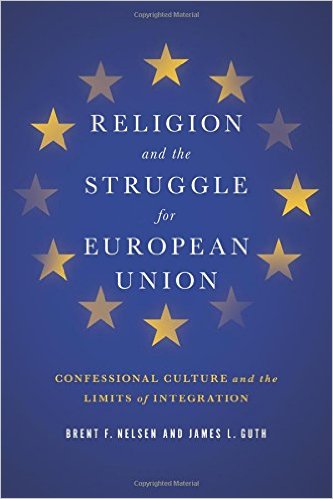
How Important is Religion for Attitudes toward European Integration?
If you wanted to explain why some countries seem more favorable toward European integration than others, what cleavage would be most important: North-South, East-West, rich-poor, or Catholic-Protestant? No doubt any difference matters, at least potentially, and many of these cleavages are overlapping. We could invent a few others as well related to linguistic families, kinship structures, or even physical geography. Nevertheless, it helps to tell the story if you can focus attention on whatever offers the best prospect of combining simplicity with coherence. By implication, you have to make a choice about what matters most.
Why Brexit is (Still) a Bad Idea
The United Kingdom is going to leave the European Union (EU). The facts being created on the ground all point to that conclusion. Nevertheless, it is still worth pointing out that that a British exit from the EU (or ‘Brexit’) is a bad idea. There are many reasons Brexit is bad. The most important is that the campaign for leaving the EU rested on a fundamental misunderstanding of international trade.
The Disintegration of the West
The British vote to leave the European Union (EU) is the first step toward formal disintegration that the West has experienced. The closest parallel is France’s decision to step outside the integrated military command structure of the North Atlantic Treaty Organization (NATO) in 1966. But France remained a member of NATO; that decision was more like Britain’s opt-out from the single currency or Schengen, even if the shift of NATO’s headquarters from Paris to Brussels made it seem more dramatic. By contrast, the British have now decided that they do not want to take part in the EU and that they want to renegotiate their relationships with the rest of the world on a case-by-case basis. The West has not gone through anything like this since the end of the Second World War.
Why We Need a Compelling Vision of Europe
There is a growing chorus of disenchantment with Europe and populist parties are preaching anti-European slogans across the member states. Today’s British referendum on European Union (EU) membership is only the most extreme manifestation of that disaffection. Whatever the outcome, the turmoil surrounding popular attitudes toward Europe is not going to end. The reason is a lack of vision.
The UK Referendum is a Bad Idea; Voting to Leave Would Make It Worse
The British referendum is based on (at least) two bad ideas. The first is that the popular legitimacy of a referendum can restore the sovereignty of the British parliament. The Leave campaign believes they can take power from Brussels and give it back to Westminster. That is a fantasy. The British parliament will be more constrained and less effective if the UK leaves. The second bad idea is that referendums are more democratic than acts of parliament (which is the kind of decision that brought Great Britain this far in its relationship with Europe). By giving the people the chance to speak their mind on a yes-or-no (in-or-out, remain-or-leave) question, we can discover what they really want. That is not how people work. Real people prefer trial and error. Real people also like to delegate responsibility for making complicated decisions. This matters because the two bad ideas combine to make the worst of all possible worlds. Britons who vote to Leave will discover that they have made a terrible mistake only to learn that there is no easy way to fix it.
Has Cameron Delivered for the City of London?
The deal reached between British Prime Minister David Cameron and his colleagues on the European Council last week was supposed to transform the relationship between the United Kingdom and the European Union on four dimensions – economic governance, competitiveness, sovereignty and immigration. Three of these issues are largely symbolic. No declaration or agreement is going to ensure ‘better regulation’ either in Brussels or in Westminster; British sovereignty was never seriously under threat from the vague aspiration to achieve an ‘ever closer union’; and while immigration is a vital issue, few experts on cross-border labour imagine it turns on access to ‘in-work benefits’ or can be deterred by the indexation of child support. By contrast, economic governance is a vital national interest both for the British people and for the City of London. The question is whether Cameron has managed to improve that aspect of Britain’s relationship with the rest of Europe.
UK Electoral Economics (redux)
The polls have closed and the votes are counted on what has been one of the more surprising British parliamentary elections in history. The Conservative party has emerged with a narrow effective majority in the United Kingdom; the Scottish National Party has an overwhelming majority in Scotland. Only one of these two outcomes was expected. The Conservatives were supposed to outperform Labour, but not by such a wide margin and never at such a huge cost to their Liberal Democratic coalition partners. By contrast, the Scottish vote was expected, although many pollsters imagined that tactical voting would prevent the SNP from emerging with so many seats.
UK Electoral Economics: A One-Way Bet
On 7 May the United Kingdom will hold the closest election since, well, the last election. The result is widely expected to be a ‘hung’ Parliament: neither the Conservatives nor the Labour Party will emerge with enough seats to control a majority. Although both parties are currently (4 May) projected to receive roughly 34 percent of the votes, the Conservative should come out with a five seat lead when the these votes are translated into Members of Parliament. That gap is too small for the Conservatives to form a coalition government with the Liberal Democrats, even relying on the support of the Northern Irish Democratic Unionist Party. It is too large for the Labour Party to form a minority government with the support of the Scottish Nationalists. By implication, either the Liberal Democrats will have to lend their support to Labour, or Labour will have to vote with the Conservatives to dissolve the Parliament with new elections to be held in October. Of course these projects could change by election time. The calculus of possibilities would obviously change along with it. In a close election like this one, even small differences can have a big impact in terms of outcome.

