Why Institutions Matter and Yet People Still Choose to Break Them: A Collection

When Donald J. Trump came back into power, his team brought along a 900+ page programme for dismantling the institutions of government. There is a certain irony to that. Trump’s team clearly hates ‘bureaucracy’, but you need a lot of staff and a substantial organizational structure to produce a 900+ page edited volume. The irony only deepens when you realize how much time the people who contributed to that volume have thought about both the institutions of government and the institutions created to help people think about the institutions of government.

Continue reading →
Rethinking Europe in an Age of Uncertainty: From Club to Commons

If water started disappearing from the European continent, glaciers melted, rivers ran dry, rain stopped falling, you would think Europeans would come together to do something about it.  They would look closely and compare notes about the sources and uses of water.  They would study why the supply was running down and they would find ways to restrict demand to match.  This would not be an easy task.  It was not an easy task for the communities of the ancient world that lived between the Tigris and the Euphrates either.  Humankind has learned to adapt to these sorts of challenges through bitter experience.  Europeans might fail to pull together, and Europe might be overtaken by the desert.  But they would try very hard to find a solution before they let that happen, and they would work with whomever is necessary to ensure their success.

Continue reading →

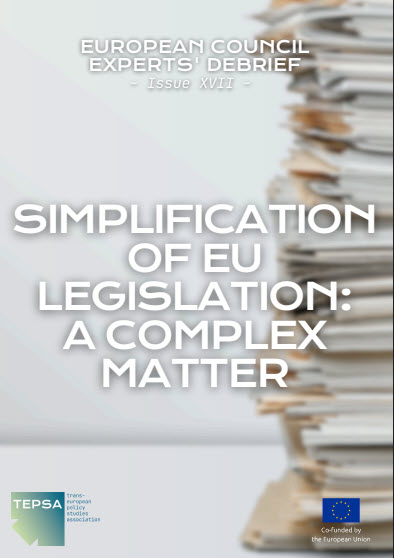
Regulation, Simplification, and European Values

Europe needs to strike a balance between regulation and simplification. To do so, Europeans need to agree on working together. This is not an easy condition to meet, particularly when it suggests a normalisation of extremist politics. Yet retreating from Europe is not an option. If anything, national politics is even more divided. Learning to find common ground and working together is the only sustainable way forward. Doing so will involve compromises, many of which will be difficult to accept. But there is no better alternative.

Continue reading →

The European Union as an Innovation in Politics

People look at the European Union and complain that it is not like a nation state. The EU is slow-moving, indecisive, and lacking in conviction. Look at the weakness of the EU’s response to the atrocities in Gaza, its ineffectiveness in standing up to the United States, and its inability to replace American support for Ukraine. Even the EU’s commitment to climate action appears to be wavering.

Such complaints ignore that the EU is not like a nation state for good reason. The European project exists to temper the behaviour of nation states. It is designed to smooth over the contradictions in liberal democracy and, in doing so, make those democracies both more resilient and more legitimate. And the EU is unique. Only Europeans benefit from that political innovation. The United States does not. Neither does Brazil, Russia, India, China, or South Africa.

Continue reading →

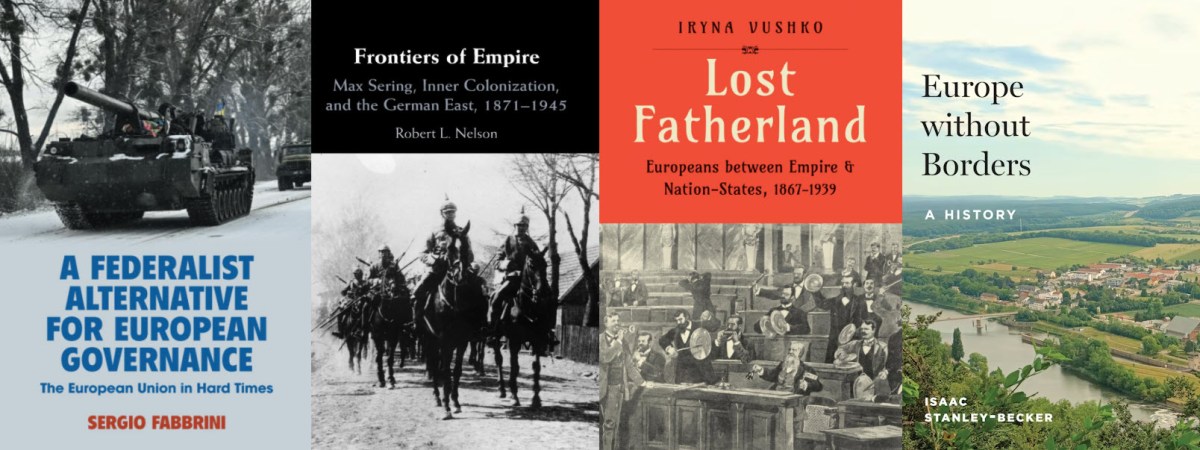
Nationalism, Cosmopolitanism, and the European Project

Four recent books – by Sergio Fabbrini, Robert L. Nelson, Iryna Vushko, and Isaac Stanley-Becker – challenge any presumptions about the uniqueness of recent European experience.  They also force us to reflect on how the integration of Europe connects with the integration of individual countries (Fabbrini), how the experience of colonization has shaped the European continent (Nelson), how lessons from Europe’s imperial past continue to influence visions of its future (Vushko), and how the effort to promote freedom of movement has revealed a tension between nationalism and cosmopolitanism that runs across the European project (Stanley-Becker).

Continue reading →

Three Perspectives on the Crisis of Democracy in Europe

The usual story about the crisis of democracy centres on populists and other bad actors who spoiled the party for the all the rest. There is some truth to this account. But it only captures a small part of what is happening. To get a full picture, you need to look at the failure of democrats and democracy to deliver on what was promised. You also need to consider the perverse incentives that democratic institutions create. And you have to imagine that there are important groups of people – many of whom are poor and disadvantaged – who come out better under other systems of government (and for whom democratization has made things worse). These perspectives on the crisis of democracy do not deny the great promise that democratic institutions have to offer. But they do give pause to consider the many different challenges that democrats have to face if the project of giving power to the people is going to be a success. Three recent books by Philipp Ther, Zsuzsanna Szelényi, and John A. Gould explain why.

Continue reading →

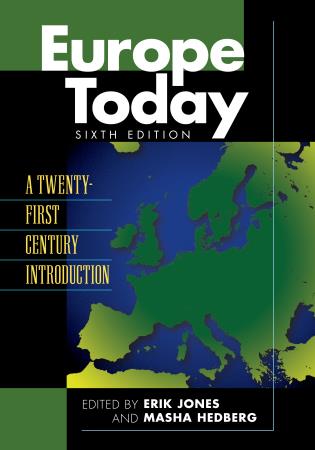
Europe Today — A Twenty-First Century Introduction (Sixth Edition)

European politics is changing, and fast. But the significance of that change is hard to appreciate without a deep understanding of ‘Europe’, meaning its history, politics, culture, and economics. Unfortunately, so much of what we ‘know’ about Europe is based on caricatures and stereotypes. (The same is no doubt true for the rest of the world as well. I blame the demise of area studies, but that is another conversation.) This edited volume — called Europe Today and published by Rowman & Littlefield — can help shed important light.

Continue reading →

Five Examples of the Strength of Area Studies

Universities do not like to study people who live in places anymore. Instead, they emphasize the importance of theory and method. There are many good reasons for doing so, particularly as you consider the wide range of skills involved in analyzing the enormous amounts of data that the internet makes available. But there are also costs. Theory is a relatively poor guide for understanding why Russia invaded Ukraine, for example. You can make arguments from theory after the fact, but a close examination of developments in the country offered a better chance for anticipating what Russia did and where we are likely to go from here. The first book in this collection is a good illustration of what I mean with that statement. That book was published just weeks before the Russian invasion. The insights it offers on the war as it is unfolding are compelling.

Continue reading →

Getting Ready for the 23 April European Council

The European Council will meet by video conference next Thursday.  When it does, the three main items on the agenda will be to approve the recommendations made by the Eurogroup on 9 April, to push forward the conversation about a European Recovery Fund, and to restart and restructure the talks about the upcoming multi-annual financial framework.  In English, that means the conversation will be about money.  Like any conversation about money it will be difficult.  The opportunities for misunderstanding are everywhere.  Now is a good time to sort out some of the issues.

Continue reading →

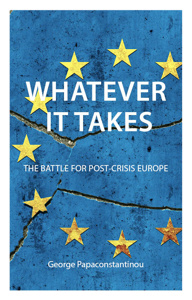
The Battle for Post-Crisis Europe

Europe needs a ‘new narrative’ if it is going to move forward rather than falling back into crisis.  That narrative cannot be a collection of policy initiatives or institutional reforms.  New policies are important; so are new institutional arrangements.  But politics and institutions do not by themselves speak to a democratic electorate – and particularly not to an electorate that has focused its attention on legitimate grievances of its own.  Only politicians with a clear vision of the future can wield influence with voters in such a context.  If the politicians with the best ideas are too afraid to forge a vision, they should not be surprised when voters attach themselves to politicians who run off in the wrong direction.  Europeans deserve better political leadership; so does Europe.

Continue reading →