Trump in Asia: From Pivot to Pirouette

Donald Trump is torn between two ambitions.  One is to challenge the conventions that have underpinned U.S. foreign policy by replacing a commitment to global leadership with a determination to put America first.  The other is to undo the legacy of Barack Obama.  Neither ambition is easy to accomplish; taken together, the two ambitions constitute an enormous task.  Sometimes they overlap.  Sometimes they point in different directions.  And sometimes they interact in a dizzying manner.  Trump’s policy toward Asia is of the dizzying sort.  Where Barack Obama pivoted to Asia from the Middle in a manner that both confirmed and defied U.S. foreign policy convention, Trump seems to twirl around Asia in an accelerating pirouette.

Continue reading →

The Franco-German Relationship Is Not What It Used to Be

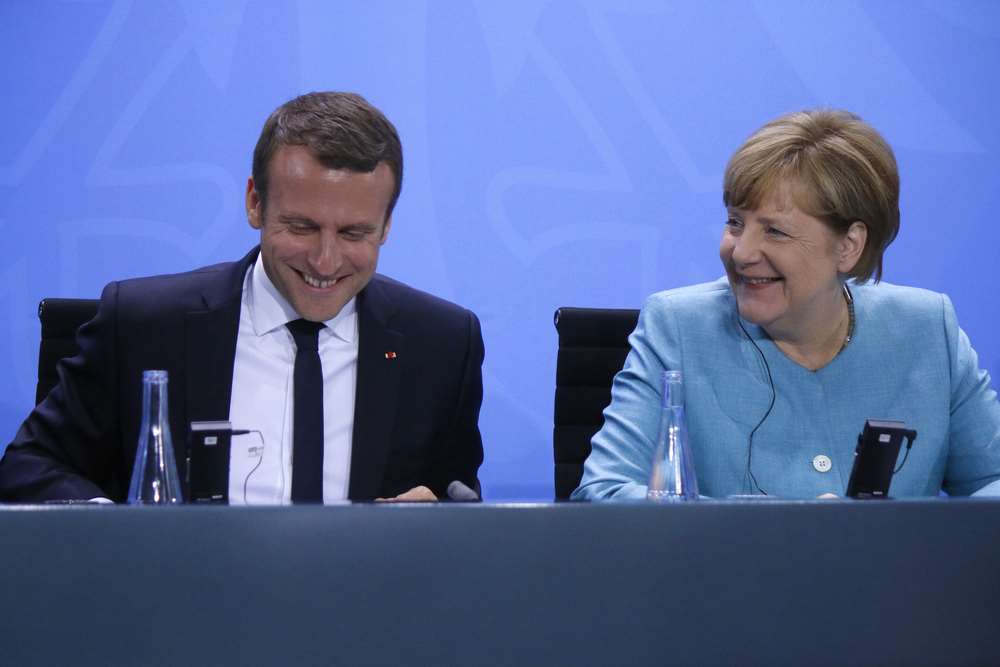
There a strong presumption that a rejuvenated Franco-German relationship can relaunch the European project. That presumption is inaccurate. The problem is not that Emmanuel Macron has too much on his plate domestically or that Angela Merkel did not get the electoral results she (and Macron) might have wanted. The major constraint on a Franco-German relaunching of Europe is not even that the French and Germans disagree on fundamental issues related to reforming macroeconomic governance in the euro area. Rather, the reason a new partnership between France and Germany is not going to relaunch the European project is that Europe is not the same.

Continue reading →

The Catalan Vote: Mobilization and Identity

The voting in Catalonia was a trap for Spain’s political leadership in Madrid. They were going to be criticized if they ignored the vote and also if they tried to stop it. Moreover, shunting responsibility for dealing with the crisis on the courts and the police as institutions was no way out. Ultimately, institutions are about people and not just words on a piece of paper. The voters in Catalonia know that. Now the Spanish government will be held to account. Political leaders everywhere should pay attention.

Continue reading →

Reforming Europe Starts at Home

Earlier this week, French President Emmanuel Macron gave a speech outlining his proposals to reform the European Union.  And there were a lot of proposals in that speech.  Surprisingly, though, not many of them focused on the euro area or on the process of European macroeconomic governance.  Macron talked about creating some kind of common budget and naming a European Minister of Finance, but he did not touch on the major issues sketched in European Commission President Jean-Claude Juncker’s State of the Union address or the letter of intent and reflection papers that the Commission has produced as well.

Continue reading →

Rigid Theories and Adaptive Markets

It is no secret that the economics profession is struggling to learn the lessons taught by the recent crisis. Two new books show where that thinking is headed. The End of Theory, by Richard Bookstaber, emphasizes the importance of focusing analysis on the world as it is, rather than on a more formal universe that is easier to model.  Adaptive Markets, by Andrew Lo, explores how much we could benefit from learning to tap the potential of modern finance.

Continue reading →

The Danger of Building Walls in Europe

On 21 August, I was invited to talk about the importance of ‘walls’ in a European context at an annual socio-cultural-political event called ‘The Meeting’ in Rimini.  I sketched these notes as an aide for the interpreters who were supposed to render my unique version of the English language into fluent Italian.  My host, Paolo Magri, insisted that I speak in Italian instead.  What followed was probably more authentic as a set of off-the-cuff remarks using my one hundred and fifty mangled Italian vocabulary words, but it may not have delivered the full message.  My central argument is that we should be wary of identity-based political mobilization.  Any politician who wants to mobilize ‘us’ against ‘them’ is not your friend.  That is as true in the United States as it is in Europe.  Alas, Europe’s history with that kind of politics is a tragic one.  Let’s hope we don’t have to experience it again.

Continue reading →

The Economics of Post-Atlantic Europe

To understand what impact the Trump Administration will have on European economic performance you have to start by re-examining the lessons of the past. Almost 50 years ago, Richard Cooper published a ground-breaking book in the United States called: The Economics of Interdependence. He conceived this book during the early 1960s while he was working as an economic policymaker in the Kennedy and Johnson Administrations, and he developed the argument as part of a high-level study group within the Council on Foreign Relations. These details are important because the message Cooper had to communicate was controversial, particularly coming from a member of the foreign policy establishment. No country, he argued, not even the United States, can ignore how other countries react to their economic policies. The problem is not good diplomacy (or good manners). It is structural. If policymakers ignore how other countries react to what they do, then they will never achieve their objectives – because the reactions of others can do much to offset any benefits a discrete policy action may deliver. Indeed, a country will be worse off going it alone than working with others. Compromise and cooperation are always better than having countries set their economic policies at cross-purposes.

Continue reading →

Equity, Efficiency, and the European Social Model

The Belgian economist André Sapir used a background paper for the September 2005 informal summit of the European Union’s economic and finance ministers to make a provocative claim about the European social model: Europe’s heads of state and government do not need to choose between equity and efficiency or between a welfare state and a market economy; with the right reforms to welfare programs and market institutions, it is possible to have both equity and efficiency at the same time. The British held the rotating presidency of the Council of the European Union and were quick to take up Sapir’s challenge. The quest to achieve both equity and efficiency moved to the heart of efforts to relaunch the Lisbon Strategy and to re-energize the European project. Unfortunately, these efforts were soon overtaken by events.

Continue reading →

What We Just Learned about Banking Union from Italy

The Italian government passed a series of decrees yesterday to allow Intesa San Paolo to buy the healthy assets of two small banks from the Veneto region – Banca popolare di Vicenza and Veneto Banca.  The state will move the distressed assets into a ‘bad bank’ for orderly liquidation.  This action closes a chapter on the Italian banking crisis that started in late 2015 when regulators made it clear that the two small Veneto banks needed more capital.  Over the intervening period, investors threw good money after bad as the banks continued to haemorrhage deposits and mount up non-performing loans.  The government did not want to step in because it did not want to impose losses on large depositors or junior bond holders.  Ultimately, though, the situation for the two institutions was unsustainable.  Now we know what the solution looks like.  The question is what we learned from the process.  The short answer is that Europe’s banking union is still dangerously incomplete.

Continue reading →

U.S. Foreign Policy and the Transatlantic Relationship

As candidate, Donald Trump made a number of comments about the utility of the North Atlantic Alliance and about the virtues of European integration that left many in the establishment scratching their heads. When he was elected President of the United States, Trump did very little to soften his tone. On the contrary, the Trump White House floated the names of potential ambassadorial appointments who talked about the transatlantic relationship and the European Union in even more disparaging tones. Of course, this could all be marked down as campaign bluster and the hiccups that come with any transition into office. Other more seasoned politicians and diplomats have challenged Europe to do more for NATO and many have expressed exasperation with the transatlantic partnership. Former Defense Secretary Robert Gates and Assistant Secretary of State for European Affairs Victoria Nuland are two obvious examples, but the list is a long one. Nevertheless, the positions taken by Trump with respect to Europe both as candidate and as President are unusual enough to warrant putting them into context.

Continue reading →