Equity, Efficiency, and the European Social Model

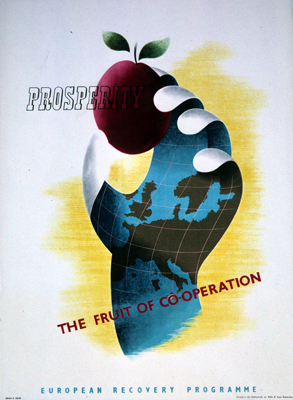
The Belgian economist André Sapir used a background paper for the September 2005 informal summit of the European Union’s economic and finance ministers to make a provocative claim about the European social model: Europe’s heads of state and government do not need to choose between equity and efficiency or between a welfare state and a market economy; with the right reforms to welfare programs and market institutions, it is possible to have both equity and efficiency at the same time. The British held the rotating presidency of the Council of the European Union and were quick to take up Sapir’s challenge. The quest to achieve both equity and efficiency moved to the heart of efforts to relaunch the Lisbon Strategy and to re-energize the European project. Unfortunately, these efforts were soon overtaken by events.

Continue reading →

What We Just Learned about Banking Union from Italy

The Italian government passed a series of decrees yesterday to allow Intesa San Paolo to buy the healthy assets of two small banks from the Veneto region – Banca popolare di Vicenza and Veneto Banca.  The state will move the distressed assets into a ‘bad bank’ for orderly liquidation.  This action closes a chapter on the Italian banking crisis that started in late 2015 when regulators made it clear that the two small Veneto banks needed more capital.  Over the intervening period, investors threw good money after bad as the banks continued to haemorrhage deposits and mount up non-performing loans.  The government did not want to step in because it did not want to impose losses on large depositors or junior bond holders.  Ultimately, though, the situation for the two institutions was unsustainable.  Now we know what the solution looks like.  The question is what we learned from the process.  The short answer is that Europe’s banking union is still dangerously incomplete.

Continue reading →

U.S. Foreign Policy and the Transatlantic Relationship

As candidate, Donald Trump made a number of comments about the utility of the North Atlantic Alliance and about the virtues of European integration that left many in the establishment scratching their heads. When he was elected President of the United States, Trump did very little to soften his tone. On the contrary, the Trump White House floated the names of potential ambassadorial appointments who talked about the transatlantic relationship and the European Union in even more disparaging tones. Of course, this could all be marked down as campaign bluster and the hiccups that come with any transition into office. Other more seasoned politicians and diplomats have challenged Europe to do more for NATO and many have expressed exasperation with the transatlantic partnership. Former Defense Secretary Robert Gates and Assistant Secretary of State for European Affairs Victoria Nuland are two obvious examples, but the list is a long one. Nevertheless, the positions taken by Trump with respect to Europe both as candidate and as President are unusual enough to warrant putting them into context.

Continue reading →

We Are Asking the Wrong Questions about Populism

The upsurge of populism in the United States and Europe has us asking the wrong questions. The issue that should concern us is not what populists have in common. The similarities between Donald Trump and Marine Le Pen or Nigel Farage are unimportant. We also should stop wondering why voters on both sides of the Atlantic are so easily beguiled by political messages that combine rejection of the ‘establishment’ with some kind of appeal to identity politics. There has never been a shortage of voices calling for the overthrow of the elite or disgruntled voters willing to follow them and any slogan that promises that a history of victimhood can be replaced wth a future of privilege is always going to be attractive. Such mobilization against ‘the system’ is a hardy perennial of democratic politics.

Continue reading →

A Very European (British) Election

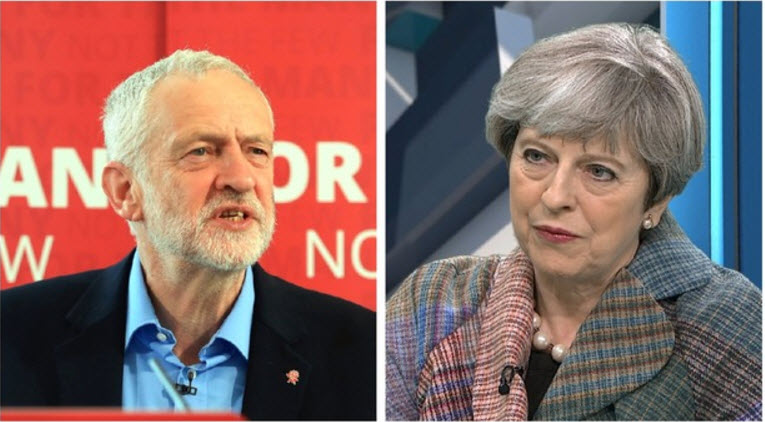
If there was a moment when it was possible to speculate that the British election would send a clear signal about Britain’s relationship with Europe, it was short-lived.  The British people may well deliver a decisive majority to Theresa May and, in the best-case scenario for her next government, she may be able to leverage that majority to win a good deal for Britain and to lay the foundations for Britain’s new role in Europe and at the global level.  Even if that all came to pass, however, future historians would be hard-pressed to say those outcomes were a clear message from the British people.  Britain’s relationship with Europe is at best peripheral to a contest that is much more about leadership style, domestic policy, and the complex web of security that surrounds terrorist violence.  Leaving aside the peculiarities of the British electoral system, you could easily imagine this contest playing out in any one of a dozen different countries on the Continent.  Britain is not having an election about Europe; it is having a very European election.

Continue reading →

Two Thoughts on Greece

As we approach another round of talks on the third Greek bailout package, I thought it would be appropriate to share two thoughts on the importance of debt forgiveness and on Europe’s preparedness in case this all goes wrong. My basic line is that debt-forgiveness is the only pragmatic choice. I also worry that Europe is not as prepared for the alternative as it should be.

Continue reading →

A Europe of National Responsibility

If there is one theme that unites European responses to the global financial crisis, it is national responsibility and not European solidarity. There have been moments of solidarity to be sure. The creation of first temporary and then permanent bailout funds was the most obvious; the unconventional monetary policies of the European Central Bank (ECB) and ECB President Mario Draghi’s ‘whatever it takes speech’ count as well. Nevertheless, with the exception of the European Stability Mechanism (ESM), these moments of solidarity have been exceptional, temporary and transitional. They bought time for governments to restructure their banks, consolidate their finances, reform their market institutions, and prepare for an uncertain future so that another round of crisis summits and rushed institution-building will no longer be required. Once this transition period is over, cross-border redistribution and burden-sharing can be kept to a minimum. That is the objective.

Continue reading →

Populism in Europe: A Government & Opposition Collection

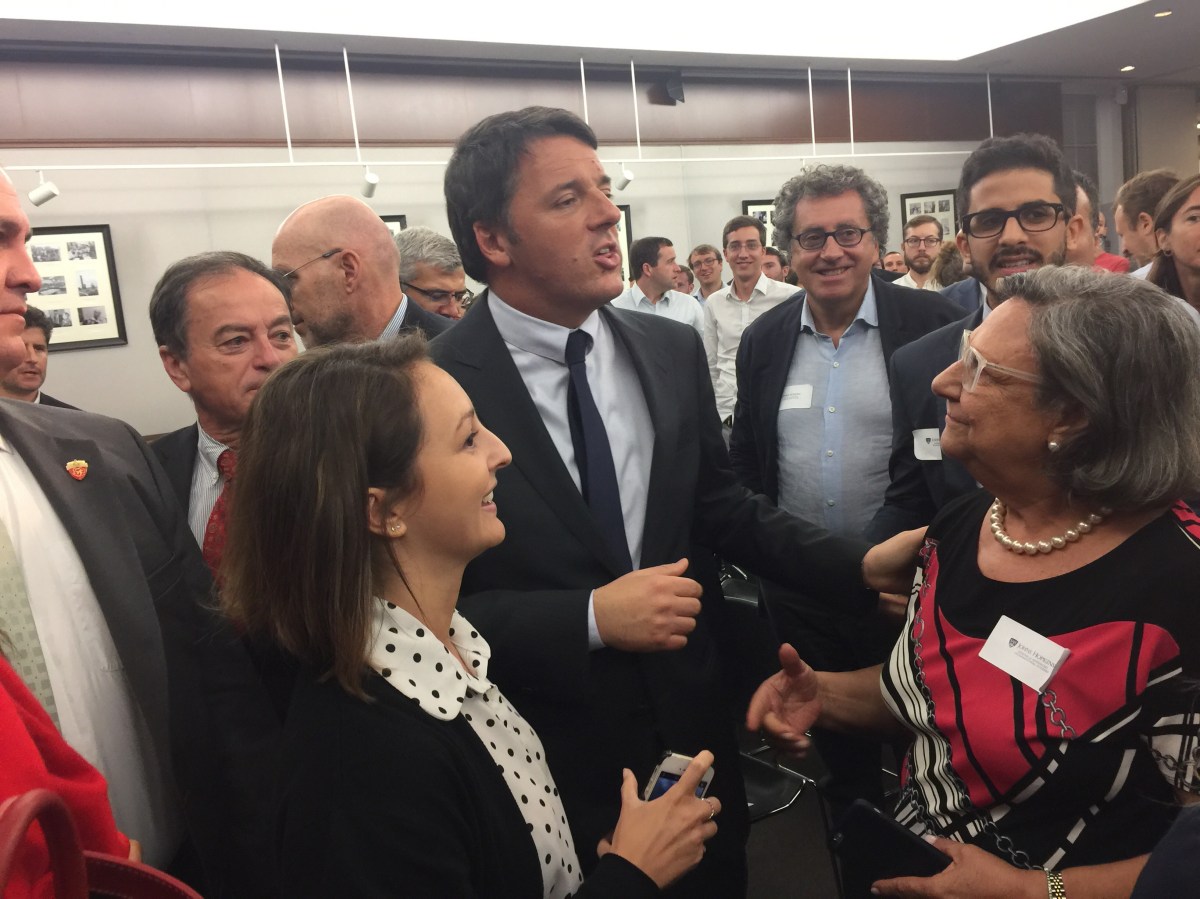
The political landscape of Europe is changing rapidly and in ways that are hard to interpret. The recent Italian referendum is a good illustration. Matteo Renzi inherited an agenda to reform the Italian constitution when he became prime minister. He negotiated an agreement with the centre-right on the precise details of the package. He shepherded the agreement through two majority votes in each of Italy’s two chambers of parliament. He then brought the agreement to a popular vote as per constitutional requirement and with an electorate broadly disenchanted with politics and therefore favourable to reform.  Nevertheless, virtually every party outside the government opposed the reform package and Renzi lost the referendum vote by a spread of twenty percentage points.  Now Renzi is out of office. Italy is without a viable electoral system because of changes made in anticipation of the (failed) constitutional reforms. And it is unclear whether the new government headed by Paolo Gentiloni has sufficient support in the Senate to pass a new electoral law. Most Italians did not want Renzi’s constitutional reforms and yet they are not happy with the status quo either. Disillusionment with politics has grown as a result.

Continue reading →

What the Apple Fine Tells Us about Multinationals and Taxation

On 30 August 2016, the European Competition Commissioner, Margrethe Vestager, announced that ‘Ireland granted undue tax benefits up to EUR 13 billion to Apple.’ Those benefits distort competition within the European marketplace and so the Commission instructed Ireland to recover the unpaid taxes. This announcement ignited a storm of protest from Apple and from the Irish government. It also sparked a wider debate about how multinational companies are taxed and about whether some form of tax harmonization is essential to the functioning of Europe’s internal market. Although some general principles have emerged from the conversation, the deeper implications of the controversy remain unclear. The debate here is less about the treatment of a single company than about the way European governments have tried to promote regional development and how the United States has relied on multinational corporations to exert influence in the wider world.

Continue reading →

Renzi’s Gamble

The meme that is circulated about the referendum in Italy is that Prime Minister Matteo Renzi gambled heavily and lost. Having staked his political future on the success of a controversial constitutional reform package, Renzi has now placed both the country’s financial system and the euro area as a whole in jeopardy. As with most memes, there is some truth hidden in this assertion. There is also much that is misleading. The complicated reality is that Renzi must have recognized that it would be hard to win the referendum. He also must have realized that he had little choice but to try.

Continue reading →