Why Institutions Matter and Yet People Still Choose to Break Them: A Collection

When Donald J. Trump came back into power, his team brought along a 900+ page programme for dismantling the institutions of government. There is a certain irony to that. Trump’s team clearly hates ‘bureaucracy’, but you need a lot of staff and a substantial organizational structure to produce a 900+ page edited volume. The irony only deepens when you realize how much time the people who contributed to that volume have thought about both the institutions of government and the institutions created to help people think about the institutions of government.

Continue reading →
Rethinking Europe in an Age of Uncertainty: From Club to Commons

If water started disappearing from the European continent, glaciers melted, rivers ran dry, rain stopped falling, you would think Europeans would come together to do something about it.  They would look closely and compare notes about the sources and uses of water.  They would study why the supply was running down and they would find ways to restrict demand to match.  This would not be an easy task.  It was not an easy task for the communities of the ancient world that lived between the Tigris and the Euphrates either.  Humankind has learned to adapt to these sorts of challenges through bitter experience.  Europeans might fail to pull together, and Europe might be overtaken by the desert.  But they would try very hard to find a solution before they let that happen, and they would work with whomever is necessary to ensure their success.

Continue reading →

Regulation, Simplification, and European Values

Europe needs to strike a balance between regulation and simplification. To do so, Europeans need to agree on working together. This is not an easy condition to meet, particularly when it suggests a normalisation of extremist politics. Yet retreating from Europe is not an option. If anything, national politics is even more divided. Learning to find common ground and working together is the only sustainable way forward. Doing so will involve compromises, many of which will be difficult to accept. But there is no better alternative.

Continue reading →

The European Union as an Innovation in Politics

People look at the European Union and complain that it is not like a nation state. The EU is slow-moving, indecisive, and lacking in conviction. Look at the weakness of the EU’s response to the atrocities in Gaza, its ineffectiveness in standing up to the United States, and its inability to replace American support for Ukraine. Even the EU’s commitment to climate action appears to be wavering.

Such complaints ignore that the EU is not like a nation state for good reason. The European project exists to temper the behaviour of nation states. It is designed to smooth over the contradictions in liberal democracy and, in doing so, make those democracies both more resilient and more legitimate. And the EU is unique. Only Europeans benefit from that political innovation. The United States does not. Neither does Brazil, Russia, India, China, or South Africa.

Continue reading →

Nationalism, Cosmopolitanism, and the European Project

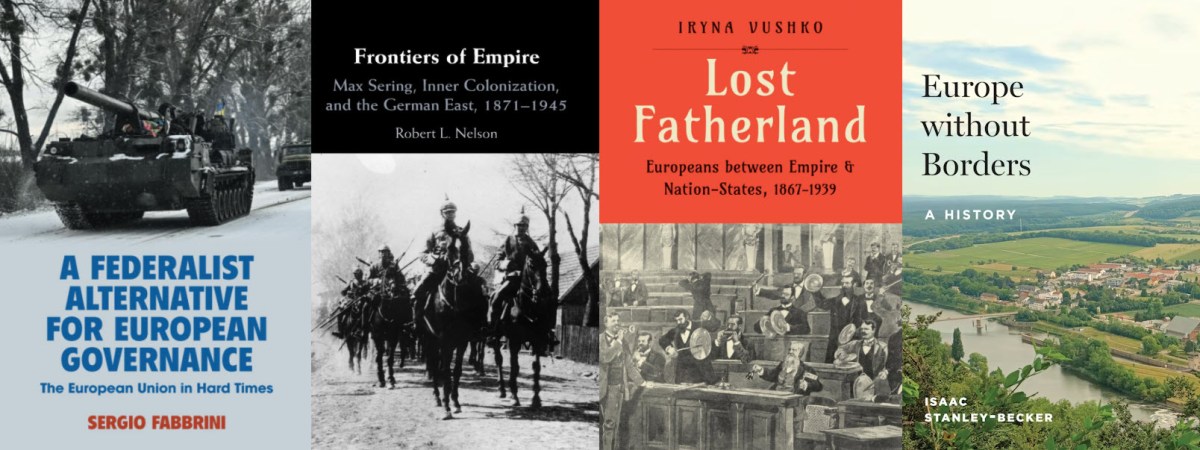
Four recent books – by Sergio Fabbrini, Robert L. Nelson, Iryna Vushko, and Isaac Stanley-Becker – challenge any presumptions about the uniqueness of recent European experience.  They also force us to reflect on how the integration of Europe connects with the integration of individual countries (Fabbrini), how the experience of colonization has shaped the European continent (Nelson), how lessons from Europe’s imperial past continue to influence visions of its future (Vushko), and how the effort to promote freedom of movement has revealed a tension between nationalism and cosmopolitanism that runs across the European project (Stanley-Becker).

Continue reading →

Europe and the Choice between Drift and Mastery

The President of the European Commission hosted an event to mark the one-year anniversary of the report on European competitiveness drafted by former Italian Prime Minister and European Central Bank President Mario Draghi last September. The message coming out of that meeting both from the European Commission President and from Draghi was that European policymakers need to do their homework. Too many items from the Draghi agenda remain unimplemented or only partly addressed. Too much more needs to be accomplished. And time is of the essence. The world is only becoming more volatile, more uncertain, and more dangerous. Europeans cannot afford to wait in preparing for this changed geopolitical environment, otherwise they will suffer the consequences. ‘Europe’ may even fail as a political project.

Continue reading →

Europe Today — A Twenty-First Century Introduction (Sixth Edition)

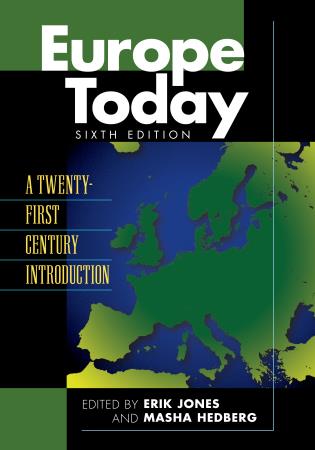
European politics is changing, and fast. But the significance of that change is hard to appreciate without a deep understanding of ‘Europe’, meaning its history, politics, culture, and economics. Unfortunately, so much of what we ‘know’ about Europe is based on caricatures and stereotypes. (The same is no doubt true for the rest of the world as well. I blame the demise of area studies, but that is another conversation.) This edited volume — called Europe Today and published by Rowman & Littlefield — can help shed important light.

Continue reading →

Five Examples of the Strength of Area Studies

Universities do not like to study people who live in places anymore. Instead, they emphasize the importance of theory and method. There are many good reasons for doing so, particularly as you consider the wide range of skills involved in analyzing the enormous amounts of data that the internet makes available. But there are also costs. Theory is a relatively poor guide for understanding why Russia invaded Ukraine, for example. You can make arguments from theory after the fact, but a close examination of developments in the country offered a better chance for anticipating what Russia did and where we are likely to go from here. The first book in this collection is a good illustration of what I mean with that statement. That book was published just weeks before the Russian invasion. The insights it offers on the war as it is unfolding are compelling.

Continue reading →

The Italian Presidential Elections and the Politics of Trust

The Italian electoral college will start voting for the successor to Sergio Mattarella as President of the Republic on 24 January. Between now and then, at least two pages of every major national newspaper will be devoted to rumours and speculation about what Italy’s party leaders are planning, who might get drafted as a candidate, and how the votes are likely to line up. It is the usual blizzard of noise that comes at the end of the white semester — the last six months of any presidential mandate, during which the President of the Republic is no longer able to dissolve parliament. What is at stake is not just who will take over the leadership of the Italian state but also whether the current government can hold together and whether the any new President will send Italy’s parliamentarians back to face the voters. By implication, Italy’s successful implementation of its national recovery and resilience plan is also on the table — together with all that entails for the rest of the European Union.

Continue reading →

Why We Need More Diverse Central Bankers

US Federal Reserve Chairman Jerome ‘Jay’ Powell opened a window on the central bank’s new monetary-policy strategy in August 2020 by stressing that he was focused on the Fed’s ‘core constituency, the American people’. A few days later, the Dutch central-bank governor, Klaas Knot, gave a speech in Amsterdam to underscore that the job of the central-banking community is ‘to manage the risks that normal people have to face’. This was no coincidence. Both men were responding to a call made in 2019 by the Australian central-bank governor Philip Lowe for monetary policymakers to ‘talk in stories people can connect with’. If former Fed chair Alan Greenspan could once pride himself on being incomprehensible, that time is over. Central bankers need to be understood – and quickly.

Continue reading →