Italy’s Referendum and the Future of the EU

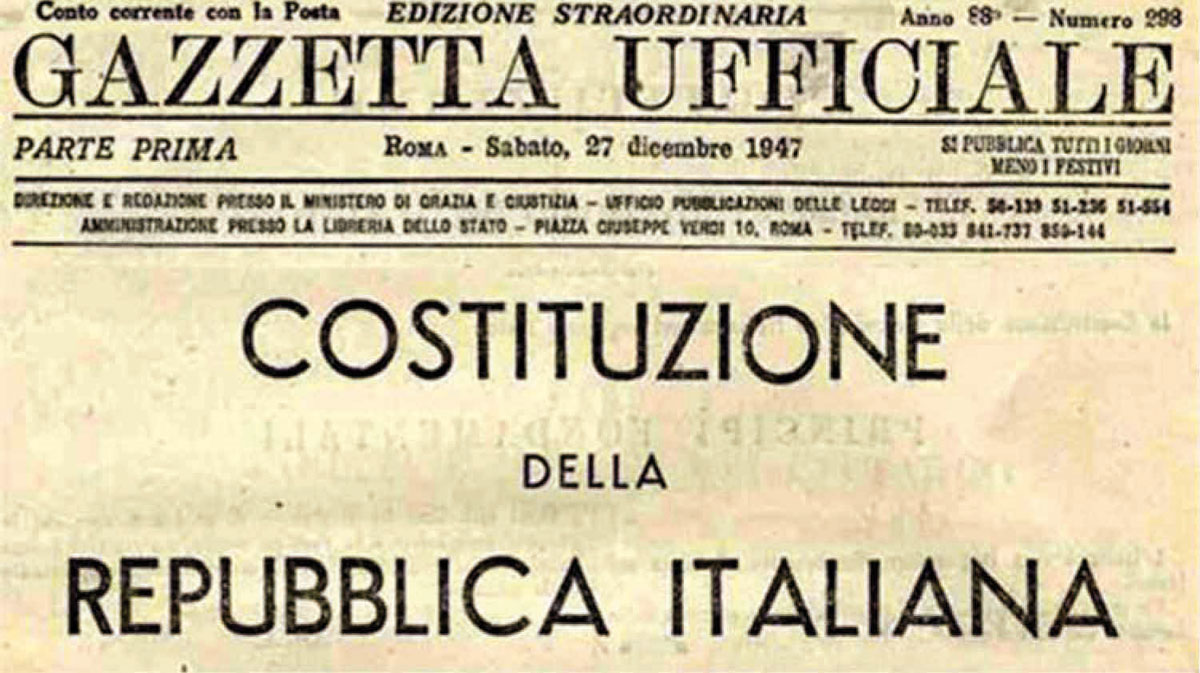
Italians head to the polls on Sunday, December 4, to approve or reject a series of constitutional reforms that will redirect policy competence from the regions to the state, that will transform the Senate into a council of regions, and that will concentrate power in the Chamber of Deputies and the national government. Italian Prime Minister Matteo Renzi argues that these reforms are necessary to equip Italy with the flexibility needed to compete in the global economy of the 21st Century. His opponents counter that changing the constitution this way will eliminate critical checks and balances and so make the country vulnerable to authoritarianism if not dictatorship.
Continue reading →

Europe Is an Unsafe Haven after Trump’s Victory

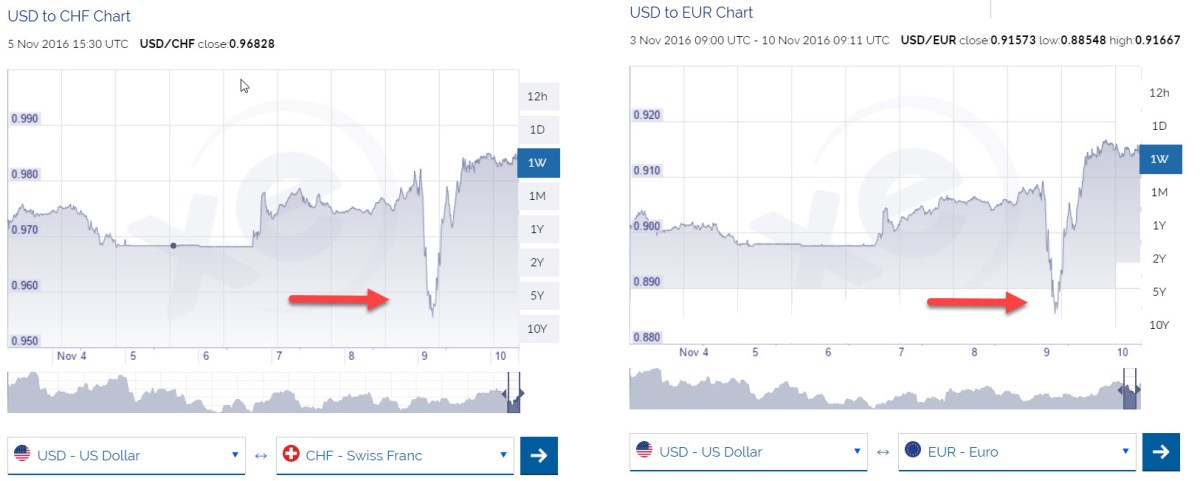
The surprise victory of Donald J. Trump in the United States (US) presidential elections briefly pushed the euro, the Swiss franc, and the Danish kroner up against the dollar. It also pushed down the yields on high quality sovereign debt and it temporarily sent equity markets into the red. This was all to be expected. Like almost everyone, market participants thought Hilary Clinton would gain the White House alongside a predominantly Republican Congress. They placed their bets to take advantage of another four years of competent administration and legislative logjam. A Trump victory upset that calculation and so some of those market participants were trying to safeguard their capital until they could get a better sense of what is happening. The assumption they made was that Europe can act as a safe-haven. Unfortunately, that assumption is mistaken.

Continue reading →

Italy’s Referendum Risks

The U.S. Ambassador to Italy, John Phillips, caused a minor uproar by telling the Italians that international investors were going to be disappointed with a ‘no’ vote in the upcoming referendum on constitutional reforms.  At about the same time, Finch announced that a popular rejection of the reforms would put downward pressure on the country’s ratings.  The Italians responded that the ambassador should mind his own business and that the ratings agencies should find some new analysts.  Italy will be fine whatever the referendum outcome, they insisted.  If anything, this unwelcome foreign intervention is going to encourage the Italians to vote against the reforms just to prove a point.  The echoes with Brexit were obvious – and widely noted.  So is Italy headed for disaster or is this just another storm in a teacup?

Continue reading →

The Relevance of U.S. Experience for Europe’s Capital Markets Union

This is a talk I gave on 21 June at the European Political Strategy Center, which is the in-house think tank of the European Commission.  The audience was very generous in listening to my presentation.  The point I tried to make is that the capital markets union is an important project, but we should be careful to ensure that policymakers supplement the efforts to make capital markets more efficient with efforts to make them more resilient.  This is an argument that I have made before and yet it is probably worth repeating.  Given the dynamics behind Europe’s economic and financial crisis, there is simply too much at stake.

***

Thank you for giving me the opportunity to share some thoughts about the relevance of U.S. experience for Europe’s capital markets union. My argument is that U.S. experience is relevant both in terms of its successes and in terms of its mistakes. The most important lesson I draw from the United States is about the importance of managing or channeling the flight to quality when financial markets come under duress. In jargon, my specific concern is when a sudden increase in liquidity preference translates into a spontaneous return of home bias. In plainer language, what interests me is how we handle situations where investors decide to place priority on protecting the value of their assets.

Continue reading →

As Long as It Takes

The European Central Bank (ECB) made no changes to its policy stance when the Governing Council met in Vienna on 2 June. Price inflation in the euro area remains well below the ECB’s definition of price stability and the prospects for inflation to move upward remain unchanged. Nevertheless, ECB President Mario Draghi argued in response to questions during his press conference, ‘we have to see the full impact of the measures that we’ve decided in March.’ Some of those, like the targeted long-term refinancing operations that offer to subsidize bank lending and the inclusion of corporate bonds in the ECB’s large-scale asset purchases will only start over the coming weeks. It takes time for such measures to work their way through to the consumption and investment that drives the real economy. And for those who complain that the ECB seems slow in meeting its policy target, Draghi made it clear that: ‘the medium term for a return to inflation to our objective of an inflation rate of close to but below 2 percent is pretty long.’ In other words, the ‘medium term’ from the ECB’s perspective is essentially as long as it takes.

Continue reading →

Ideas, Information and Structural Power

Professor Pepper D. Culpepper recently accepted a job in Oxford at the Blavatnik School of Government. This means he will leave the European University Institute, where he has been teaching since 2010. A group of his current and former PhD students decided to organize half-day event to celebrate Professor Culpepper’s time at the EUI. As part of that celebration, I offered to do a profile of Professor Culpepper’s research contribution. What follows is the text that I presented.

Continue reading →

Banking Union or Bait-and-Switch?

When the Council of Economics and Finance Ministers (ECOFIN) meets informally on Friday, 22 April, one issue on the table will be the reduction of bank exposure to the sovereign debt of their home governments. This issue was laid out in a note from the Dutch Presidency that was leaked on Wednesday. The response of the Italian government in particular was immediate and strongly negative. Italian banks are heavily exposed to Italian sovereign debt and any attempt to reduce that exposure would impose unacceptable costs on an already fragile Italian financial system. To some degree this is the case for other peripheral countries as well. The Dutch Presidency note argues that Europe’s banking union needs to be strengthened with some kind of European Deposit Insurance Scheme (EDIS) and ‘a common backstop for the Single Resolution Fund (SRF)’. Before the Dutch Presidency can flesh out its position on these key support mechanisms, however, it needs to tackle the ‘bank-sovereign nexus’ so that ‘risk sharing and risk reduction go together’. Intellectually, this is a coherent argument.

Continue reading →

U.S. Presidential Elections – Known and Unknown

The U.S. Presidential elections represent a stark choice between a competent if unexciting continuation of the status quo and an emotional – perhaps even terrifying – break with the past. Moreover, the results of the contest will be felt far beyond the borders of the United States. On 17 and 18 March, I was invited by the United States consulate in Milan to participate in a series of events to explain the ongoing elections. The audiences were mostly Italian but there were some others mixed into the groups as well. My goal was give some sense of how the U.S. elections are going to have an impact on the outside world. That impact will be both direct and indirect. The direct effects will come through the change in U.S. foreign policy. The indirect effects will come through the change in economic policy. I outlined the two issues in turn. Then I offered some thoughts on the future of U.S. global leadership. The bottom line in all three cases is very similar: Americans must choose between the familiar and the unknown – and the world must accept the consequences.

Continue reading →

The ECB’s New Tactic — Pay to Lend

The European Central Bank (ECB) announced a raft of policy measures on Thursday, March 10, intended to give a further boost to euro area economic performance. Most of these measures were unconventional and yet still precedented. The ECB lowered its main policy rates, accelerated the pace of its asset purchases, and widened the pool of assets eligible to be included in its purchasing program. It also renewed its program for targeted loans to banks that extend credit to the non-financial sector. The only new element was the rate of interest that the banks would pay to access credit that they could lend for investment. The question is whether that new wrinkle will make much of a difference. As is often the case, the answer depends less on the mechanics of monetary policy than on the magic of market ‘confidence’.

Continue reading →

Has Cameron Delivered for the City of London?

The deal reached between British Prime Minister David Cameron and his colleagues on the European Council last week was supposed to transform the relationship between the United Kingdom and the European Union on four dimensions – economic governance, competitiveness, sovereignty and immigration. Three of these issues are largely symbolic. No declaration or agreement is going to ensure ‘better regulation’ either in Brussels or in Westminster; British sovereignty was never seriously under threat from the vague aspiration to achieve an ‘ever closer union’; and while immigration is a vital issue, few experts on cross-border labour imagine it turns on access to ‘in-work benefits’ or can be deterred by the indexation of child support. By contrast, economic governance is a vital national interest both for the British people and for the City of London. The question is whether Cameron has managed to improve that aspect of Britain’s relationship with the rest of Europe.

Continue reading →