Italy’s Referendum and the Future of the EU

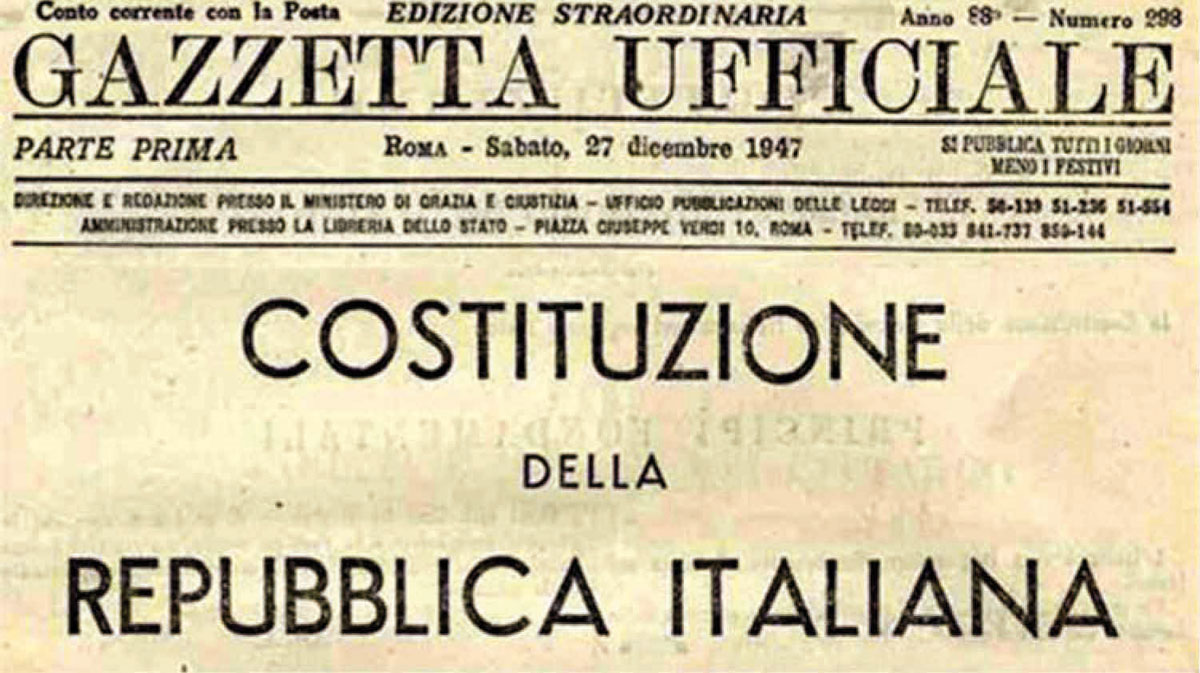
Italians head to the polls on Sunday, December 4, to approve or reject a series of constitutional reforms that will redirect policy competence from the regions to the state, that will transform the Senate into a council of regions, and that will concentrate power in the Chamber of Deputies and the national government. Italian Prime Minister Matteo Renzi argues that these reforms are necessary to equip Italy with the flexibility needed to compete in the global economy of the 21st Century. His opponents counter that changing the constitution this way will eliminate critical checks and balances and so make the country vulnerable to authoritarianism if not dictatorship.
Continue reading →

Why We Need a Theory of Disintegration

The British vote to leave the European Union (EU) has introduced a new political dynamic in Europe. For lack of a better term, let’s call it ‘disintegration’. The problem is that we know very little about the many different motivations and other forces at work. Disintegration is not integration in reverse. We cannot simply take the many different models or interpretations of what brought European countries together and run them backward to understand events as they are unfolding. We cannot use past experience as much of a guide to anticipate future events or developments either. Lacking a coherent theory of disintegration, we are left to rely primarily on guesswork. Given how most commentators performed in forecasting Britain’s vote to leave the EU, my suspicion is that much of that guesswork will prove inaccurate. We are still sailing in uncharted waters.

Continue reading →

A Compelling Vision for Europe

Europe’s heads of state and government face a real dilemma. They want to attract support for European integration from the people of Europe and they also want to show the outside world that the European Union remains a major source of dynamism and innovation. So the question is how best to achieve those two goals. Should they propose a new project that will attract everyone’s attention or should they try to come up with some ‘vision’ that explains why Europe still matters?

Continue reading →

Referendums, Europe, and the ‘Forbidden Planet’

The British referendum sent shockwaves across Europe. Contrary to expectations, the vote to Leave defeated the vote to Remain by 52 to 48 percent. The turnout was high and the outcome was uniformly distributed. The only major exceptions were the votes in favor of remaining in the European Union (EU) cast in London, Northern Ireland, and Scotland. Without those areas of support, the vote to leave would have been even more decisive. The explanations are mostly negative. The English voted overwhelmingly against outside interference, elites, experts, and immigration. They also voted against ‘fear mongering’. What they voted for was a mixture of self-determination and something different. How they will use that autonomy remains to be seen. At the moment, the British ruling elite is too engaged in soul-searching and leadership contests to offer much in the way of vision.

Continue reading →

Why Brexit is (Still) a Bad Idea

The United Kingdom is going to leave the European Union (EU). The facts being created on the ground all point to that conclusion. Nevertheless, it is still worth pointing out that that a British exit from the EU (or ‘Brexit’) is a bad idea. There are many reasons Brexit is bad. The most important is that the campaign for leaving the EU rested on a fundamental misunderstanding of international trade.

Continue reading →

The Disintegration of the West

The British vote to leave the European Union (EU) is the first step toward formal disintegration that the West has experienced.  The closest parallel is France’s decision to step outside the integrated military command structure of the North Atlantic Treaty Organization (NATO) in 1966.  But France remained a member of NATO; that decision was more like Britain’s opt-out from the single currency or Schengen, even if the shift of NATO’s headquarters from Paris to Brussels made it seem more dramatic.  By contrast, the British have now decided that they do not want to take part in the EU and that they want to renegotiate their relationships with the rest of the world on a case-by-case basis.  The West has not gone through anything like this since the end of the Second World War.

Continue reading →

Why We Need a Compelling Vision of Europe

There is a growing chorus of disenchantment with Europe and populist parties are preaching anti-European slogans across the member states. Today’s British referendum on European Union (EU) membership is only the most extreme manifestation of that disaffection. Whatever the outcome, the turmoil surrounding popular attitudes toward Europe is not going to end. The reason is a lack of vision.

Continue reading →

The Relevance of U.S. Experience for Europe’s Capital Markets Union

This is a talk I gave on 21 June at the European Political Strategy Center, which is the in-house think tank of the European Commission.  The audience was very generous in listening to my presentation.  The point I tried to make is that the capital markets union is an important project, but we should be careful to ensure that policymakers supplement the efforts to make capital markets more efficient with efforts to make them more resilient.  This is an argument that I have made before and yet it is probably worth repeating.  Given the dynamics behind Europe’s economic and financial crisis, there is simply too much at stake.

***

Thank you for giving me the opportunity to share some thoughts about the relevance of U.S. experience for Europe’s capital markets union. My argument is that U.S. experience is relevant both in terms of its successes and in terms of its mistakes. The most important lesson I draw from the United States is about the importance of managing or channeling the flight to quality when financial markets come under duress. In jargon, my specific concern is when a sudden increase in liquidity preference translates into a spontaneous return of home bias. In plainer language, what interests me is how we handle situations where investors decide to place priority on protecting the value of their assets.

Continue reading →

The Implications of Opting Out

The referendum campaign on whether Great Britain should remain a member state of the European Union (EU) or leave is in full swing. Campaigners for Britain to ‘remain’, including Prime Minister David Cameron, insist that the British government has successfully renegotiated its relationship with the EU. Those who want Britain to ‘leave’ insist that the opt-outs Cameron won are insignificant and untrustworthy; whatever the British government may say, the bureaucrats in Brussels are plotting a ‘super state’ that will usurp British sovereignty.

Continue reading →

As Long as It Takes

The European Central Bank (ECB) made no changes to its policy stance when the Governing Council met in Vienna on 2 June. Price inflation in the euro area remains well below the ECB’s definition of price stability and the prospects for inflation to move upward remain unchanged. Nevertheless, ECB President Mario Draghi argued in response to questions during his press conference, ‘we have to see the full impact of the measures that we’ve decided in March.’ Some of those, like the targeted long-term refinancing operations that offer to subsidize bank lending and the inclusion of corporate bonds in the ECB’s large-scale asset purchases will only start over the coming weeks. It takes time for such measures to work their way through to the consumption and investment that drives the real economy. And for those who complain that the ECB seems slow in meeting its policy target, Draghi made it clear that: ‘the medium term for a return to inflation to our objective of an inflation rate of close to but below 2 percent is pretty long.’ In other words, the ‘medium term’ from the ECB’s perspective is essentially as long as it takes.

Continue reading →