Central Banking Since the Global Financial Crisis: A Collection

Donald Trump’s assault on the political independence of the U.S. Federal Reserve has been brewing for a long time. And his attack on central bank independence is also not limited to the United States. Governments in other countries have been at it for a while now. The reason is simple. The ‘Great Moderation’ achieved by monetary economists in the 1990s and early 2000s proved unsustainable. The ensuing crisis made it easy for politicians to challenge central bank independence.

Continue reading →
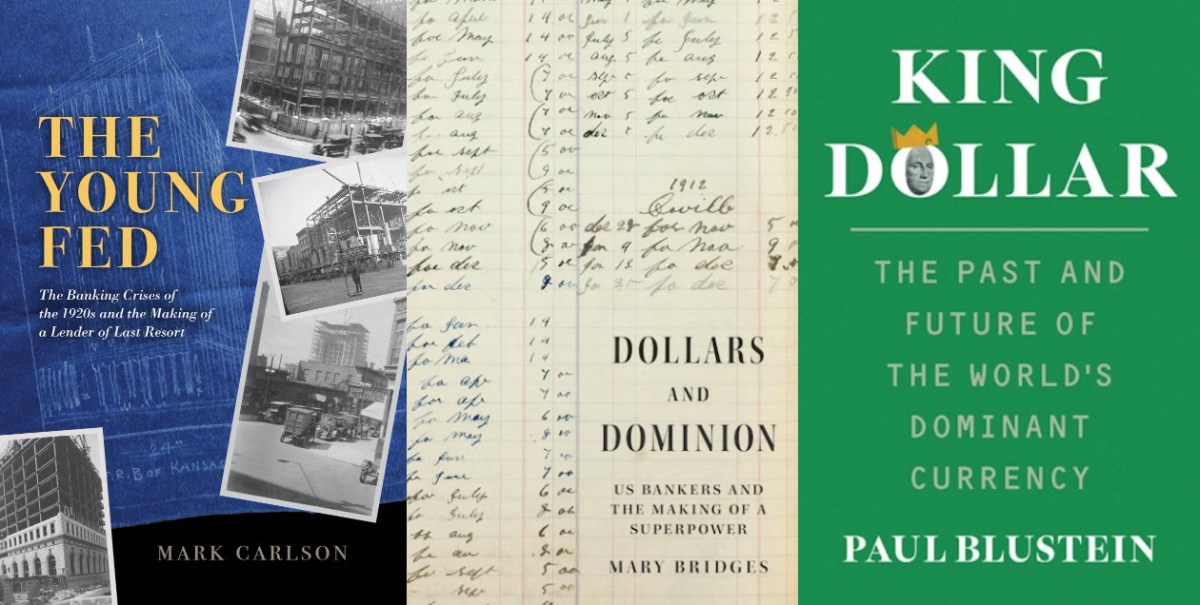
How Long Will the Dollar Remain the World’s Currency?

To understand the future of dollar dominance, you need to understand its past.  The recent books about the early experiences of the U.S. Federal Reserve System (Mark Carlson), the spread of U.S. banks abroad (Mary Bridges), and the resilience of the dollar as a global currency (Paul Blustein), offer essential insights for any debate about how either other national currencies or new technologies could replace the dollar in world markets. The dollar’s emergence as a global currency came unexpectedly; its disappearance may be unexpected as well.

Continue reading →

From Narrative to Crisis: The Future of Economic Thought

Three recent books explore important changes in the way we understand the economy. Robert Shiller focuses on the need to bring in ‘narratives’ that circulate within the economy or that can be borrowed from other disciplines; Thomas Philippon asks why America gave up on free markets and looks again the importance of regulation in relation to market competition; and James Gerber examines the influence of financial crises and the lessons we learn in their aftermath. Together these books tell us a lot about where economic thinking is headed. The novel coronavirus pandemic has done little to change the direction of travel and much to accelerate the pace.

Continue reading →