Great Powers Matter

International regimes for the management of inter- and intra-state conflict only work when they can operate in a stable regional security environment. International mediators can have the most skillful negotiators, the most credible ‘honest-brokers’, the most attractive incentives for peaceful reconciliation, and the most sophisticated political institutions for power sharing, but they are unlikely to succeed without the determined support of Great Powers and so long as there are other powerful actors in the region who encourage one side or the other to resort to violence. Moreover, this is an enduring feature of international relations; it was as true during the interwar period as it is now that the Cold War has ended. Security is a nested condition that policymakers and diplomats create from the outside-in and not from the inside-out.

Continue reading →

We Are Asking the Wrong Questions about Populism

The upsurge of populism in the United States and Europe has us asking the wrong questions. The issue that should concern us is not what populists have in common. The similarities between Donald Trump and Marine Le Pen or Nigel Farage are unimportant. We also should stop wondering why voters on both sides of the Atlantic are so easily beguiled by political messages that combine rejection of the ‘establishment’ with some kind of appeal to identity politics. There has never been a shortage of voices calling for the overthrow of the elite or disgruntled voters willing to follow them and any slogan that promises that a history of victimhood can be replaced wth a future of privilege is always going to be attractive. Such mobilization against ‘the system’ is a hardy perennial of democratic politics.

Continue reading →

A Very European (British) Election

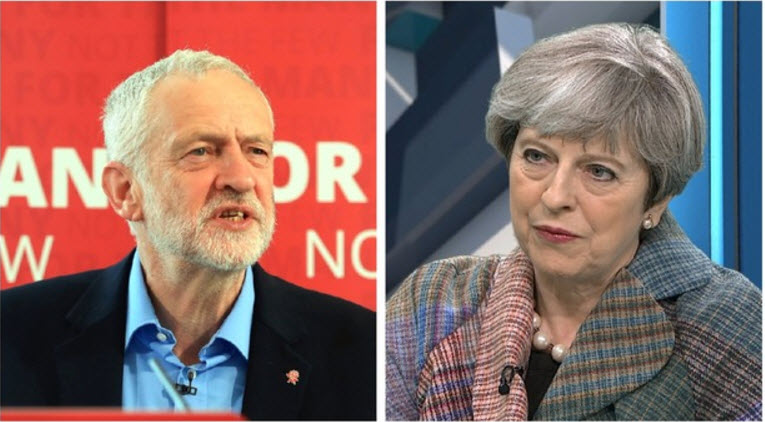
If there was a moment when it was possible to speculate that the British election would send a clear signal about Britain’s relationship with Europe, it was short-lived.  The British people may well deliver a decisive majority to Theresa May and, in the best-case scenario for her next government, she may be able to leverage that majority to win a good deal for Britain and to lay the foundations for Britain’s new role in Europe and at the global level.  Even if that all came to pass, however, future historians would be hard-pressed to say those outcomes were a clear message from the British people.  Britain’s relationship with Europe is at best peripheral to a contest that is much more about leadership style, domestic policy, and the complex web of security that surrounds terrorist violence.  Leaving aside the peculiarities of the British electoral system, you could easily imagine this contest playing out in any one of a dozen different countries on the Continent.  Britain is not having an election about Europe; it is having a very European election.

Continue reading →

European Enlargement Changed Both Sides of the Continent

Something happened to Europe after the fall of the Berlin Wall and it affected both sides of the continent. That ‘something’ was not simply a diffusion of western ideas, policies and politics to the East. The former communist countries of Central and Eastern Europe underwent a profound transformation, but to say that they became ‘normal’ – and by saying that to mean they became more ‘western’ – would be an exaggeration. Such a statement would also overlook the impact of ideas, policies, politics, and people that spread from East to West. The history of Europe since 1989 is a story of ‘co-transformation’. It is also more contingent than teleological. Things did not have to wind up as they have – which is good, because there are many things about Europe that we should work hard to change.

Continue reading →

Two Thoughts on Greece

As we approach another round of talks on the third Greek bailout package, I thought it would be appropriate to share two thoughts on the importance of debt forgiveness and on Europe’s preparedness in case this all goes wrong. My basic line is that debt-forgiveness is the only pragmatic choice. I also worry that Europe is not as prepared for the alternative as it should be.

Continue reading →

Fresh Perspectives on Monetary Union

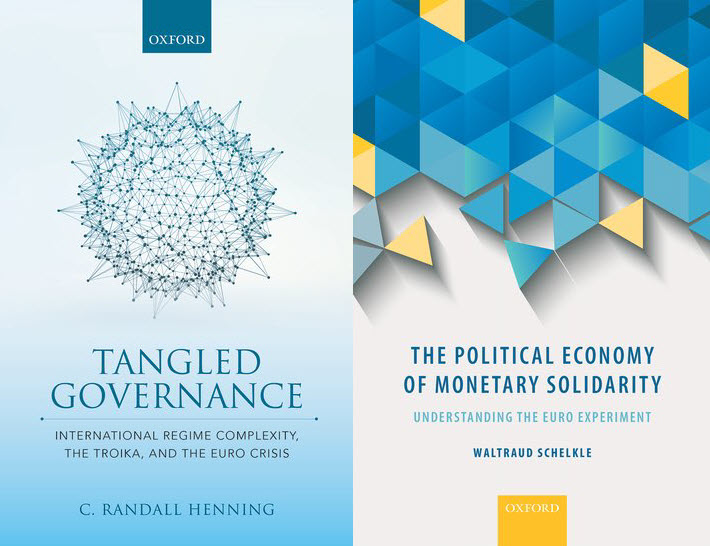
Oxford University Press has published two new books on the political economy of the euro area that should be required reading.  One, by C. Randall Henning, explains why the International Monetary Fund has become a central actor in the stabilization of the euro area; another, by Waltraud Schelkle, sheds new light on what the single currency has to offer both in its current form and looking to the future.  My reviews of both books are below.

Continue reading →

The End of the Party

The election of Emmanuel Macron is the triumph of populism and not its demise. His direct appeals to French voters were more compelling than those of Marine Le Pen. Nevertheless, the strategy of the two second-round candidates was much the same: play to emotions and identity; circumvent the established traditions of party politics; run against entrenched elites as much as against the other side. Now comes the hard part of converting a populist movement (En Marche!) into a political party capable of governing the institutions of state (La République En Marche!). Macron’s supporters no doubt realize this is important but are understandably still glowing in the confirmation that their France can embrace hope and change. Thinking back to the last successful hope-and-change candidates, however, it is necessary to stress how things can go wrong.

Continue reading →

The Conflict over European Economic Policymaking

Economic governance is in the eye of the beholder. The French want discretion, flexibility, and effective crisis management; the Germans want rules, discipline, and effective crisis avoidance. The euro as a single currency reflects both tendencies. There are aspects of Europe’s macroeconomic framework that are flexible and responsive (like the European Central Bank) and aspects that are more rigid and formulaic (like the ‘six pack’ and ‘two pack’ of policy coordination procedures that strengthen the ‘Stability and Growth Pact’). The challenge for Europeans is to find a sustainable balance. Too much of either tendency is not only unacceptable to one side or the other in the Franco-German partnership, it is also unlikely to work in stabilizing either the euro as a single currency or the European Union as a political project.

Continue reading →

A Europe of National Responsibility

If there is one theme that unites European responses to the global financial crisis, it is national responsibility and not European solidarity. There have been moments of solidarity to be sure. The creation of first temporary and then permanent bailout funds was the most obvious; the unconventional monetary policies of the European Central Bank (ECB) and ECB President Mario Draghi’s ‘whatever it takes speech’ count as well. Nevertheless, with the exception of the European Stability Mechanism (ESM), these moments of solidarity have been exceptional, temporary and transitional. They bought time for governments to restructure their banks, consolidate their finances, reform their market institutions, and prepare for an uncertain future so that another round of crisis summits and rushed institution-building will no longer be required. Once this transition period is over, cross-border redistribution and burden-sharing can be kept to a minimum. That is the objective.

Continue reading →

Trump, Populism, and the Identity of Europe

The inauguration of Donald Trump as 45th President of the United States represents the triumph of populism over the world’s greatest democracy. It also sets the stage for populists to make further gains across Europe. Trump’s affection for Nigel Farage is plain to see. His affinity for (and his attraction to) populists of other shades is easy to find as well. The challenge is to sort out what this means for the European project. Populists tend to stake out Euroskeptical positions, and Donald Trump has made no secret of his indifference for the European Union, but it is hard to say just how populists can have a lasting impact unless they somehow manage to seize control over government.

Continue reading →