Writing books is the hardest part of being an academic. It is also the most rewarding. I will have to focus more attention on this activity. That said, the books listed below are very different. The first was published as a ‘textbook’, even if it more like a conventional research monograph. The second is a standard academic book. The third is directed at the policy community and the wider world of interested readers. The fourth was written as weekly notes for consulting clients (and the copyrite is held by Oxford Analytica). The fifth book is more like a long journal article and is still in production. The publication will be in November 2025. Unlike the other pages in this site, I have listed this material in chronological order, describing the books as I wrote them and giving the bibliographic entry after the description. The most recent book is at the bottom.
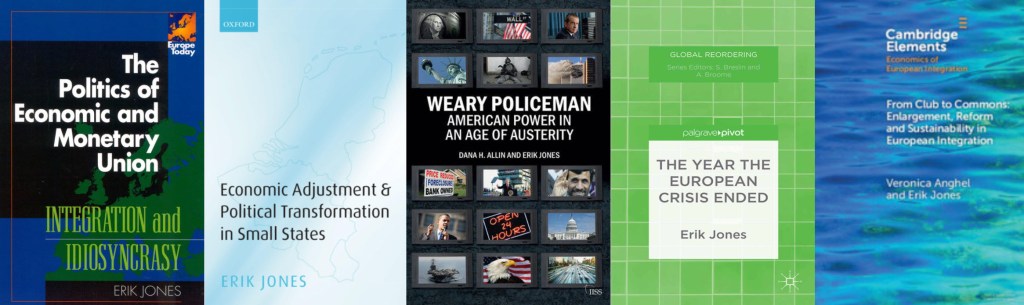
My first book is on The Politics of Economic and Monetary Union and was the product of my work with Daniel Gros at the Brussels-based Centre for European Policy Studies in the 1990s. That is work I did alongside my doctoral dissertation at the Johns Hopkins School of Advanced International Studies (SAIS). Daniel was very generous in exposing me to debates about monetary integration as the single currency was being formed. My challenge was to to understand the politics behind the process of monetary integration. This project started in 1990 and culminated more than a decade later. The euro took less time to figure out than my own thoughts about it.
The Politics of Economic and Monetary Union. Lanham: Rowman & Littlefield, 2002.
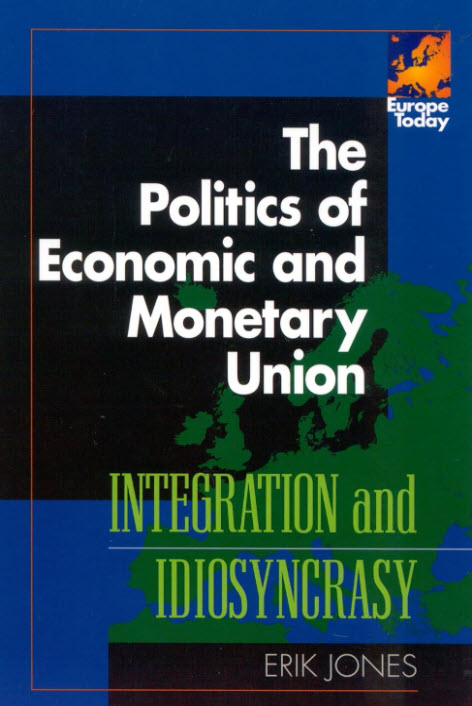
My second book is on Economic Adjustment and Political Transformation in Small States and is my doctoral dissertation. That started in 1990 as well. My inspiration was Peter Katzenstein‘s brilliant Small States in World Markets which I read alongside an essay by Paul De Grauwe and Wim Vanhaverbeke comparing the economic performance of Belgium and the Netherlands with the northern Laender of West Germany. Katzenstein argued that small states used consensus politics to improve their economic performance; De Grauwe and Vanhaverbeke showed how Belgium and the Nethlerands effectively exported their economic problems to West Germany. My question was what would happen to Belgian and Dutch economic performance when that consensus politics broke down. I defended the dissertation in 1995 and then sat on the manuscript for another decade before wrestling it into shape for publication. In the meantime, consensus politics in Belgium and the Netherlands evaporated.
Economic Adjustment and Political Transformation in Small States. Oxford: Oxford University Press, 2008.
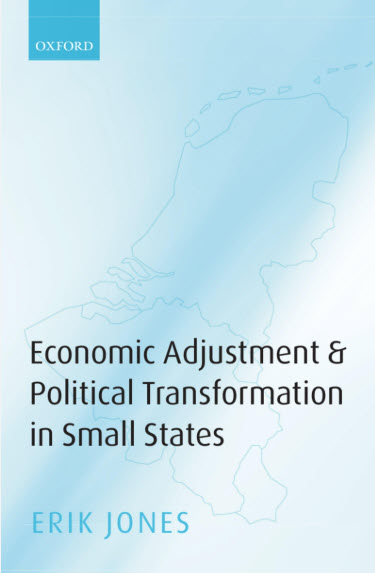
My third book is on American Power in an Age of Austerity and is a collaboration with my good friend and frequent editor and writing partner, Dana Allin. Dana was commissioned to write an Adelphi book for IISS on American foreign policy. We had started collaborating at the journal Dana edits called Survival and he invited me to join him in this book project. It was a terrific experience. Dana did most of the heavy lifting but I learned a lot in the process. My contributions to Survival have been a fun way to bridge the academic and policy communities over the decade and more that followed.
Weary Policeman: American Power in an Age of Austerity. London: Routledge, 2012. With Dana Allin.
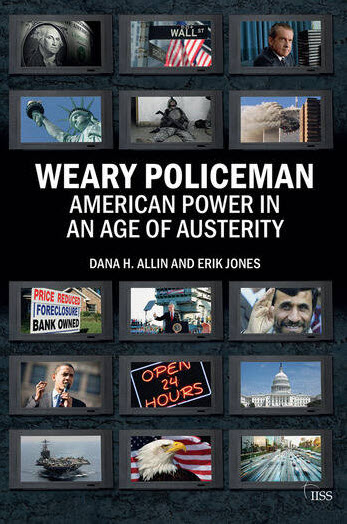
My fourth book explores The Year the European Crisis Ended and emerged from my work at a political risk consultancy called Oxford Analytica. The CEU at the time, Nader Mousavizadeh, asked me to lead the Europe programme for a year in an experiment to see if we could bring together the separate analytical and editorial divisions. This experiment was to take place alongside a close collaboration we formed between SAIS in Bologna and Oxford Analytica in memory of Janika Albers, who was a student of mine at SAIS and a colleague of ours at OA who died tragically in a car accident just weeks before we were due to celebrate the launch of a new course on political risk at SAIS in Bologna. (Janika’s classmates have since transformed that partnership into an annual roundable on political risk at SAIS in Janika’s honour.) As part of our experiment at OA, I agreed to write a weekly note for clients. I started those notes in June 2012 as Europe headed into the most dangerous phase of its sovereign debt crisis and finished them in June 2013 shortly after the near disaster involving the bailout of Cyprus. Although Europe obviously struggled for many years after this period, the title of the book reflects the powerful influence of European Central Bank President Mario Draghi’s famous ‘whatever it takes’ speech on European financial markets. That speech ensured the crisis had passed even if individual countries like Cyprus and Greece — and European macroeconomic performance more generally — continued to suffer.
The Year the European Crisis Ended. Basingstoke: Palgrave, 2014.
My fifth book is called From Club to Commons: Enlargement, Reform and Sustainability in European Integration and is published by Cambridge University Press as part of their ‘elements’ series in the economics of European integration edited by Nauro Campos. That book is co-authored with Veronica Anghel. The subject is the relationship between the enlargement of the European Union and the process of European integration. In many ways, the book brings together insights we have developed in our current research on Russia’s full-scale invasion of Ukraine and its impact on the European Union. The book also reflects our ongoing efforts to bring Elinor Ostrom‘s work on the management of common resource pools more prominently into the study of European integration and international relations more generally.
From Club to Commons: Enlargement, Reform and Sustainability in European Integration. Cambridge: Cambridge University Press, 2025. With Veronica Anghel.
 Erik Jones